Can the Creative Economy Be Our Trade Balancer?
By Pickle August 10, 2025
Share:


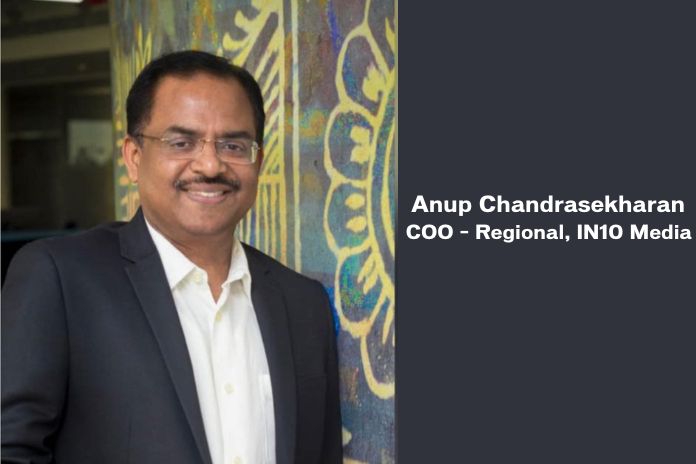
India’s next big export isn’t steel or software—it’s stories. If we protect our IP and back our creators, our culture can power our economy.
By Anup Chandrasekharan COO – Regional, IN10 Media
The proposed 50 percent tariff hike by the US is not just a trade policy shift. It is a red flag for economies like India to rethink what truly powers growth. In a world where goods are becoming costlier to move, stories, ideas, and IP do not need shipping lanes. They need strategy. The creative economy is no longer just soft power. It is economic muscle waiting to be flexed.
India’s media and entertainment sector, valued at over Rs 2.3 lakh crore and expected to cross Rs 2.8 lakh crore by 2025, spans film, television, digital, music, gaming, and live events. It is one of India’s fastest growing industries, but one of the least activated as a trade and economic lever. As traditional exports face headwinds, our stories can become new age exports, delivering both cultural influence and hard revenue.
For years, India has been a consumer of international formats, from reality shows to animation. It is time to reverse the flow. With the right policy support and creator incubation, Indian producers can develop content built to travel, rooted in our culture but crafted for the world. When a show like Delhi Crime wins an International Emmy, or RRR lights up global box offices and fan forums, it is not a one off. It is proof that our IP, if empowered, can compete on the world stage. This is not about borrowing global ideas. It is about exporting Indian originality.
But this momentum is undermined every day by a persistent threat: piracy. According to ‘The Rob Report’ released by EY and the Internet and Mobile Association of India (IAMAI) in October 2024, the size of India’s piracy economy was Rs 22,400 crore in 2023 with losses incurred from movie theaters to the tune of Rs 13,700 crore and Rs 8,700 crore from OTT platforms.
Reports from 2025, such as one by MUSO, indicate India was the second-largest source of online piracy globally in 2024, hinting at potentially increasing losses. However, exact figures for 2025 are not yet available.
According to the ‘Impact of Piracy on India’s Online Video Sector’ report, released by CII in collaboration with IP House and Media Partners Asia, piracy could cost India’s digital video sector US$2.4 billion and 158M users by 2029 if we fail to take any action against it.
Films are leaked within hours, OTT originals are stripped and redistributed, and music circulates freely outside formal channels. This is not just content theft. It is economic leakage. Piracy erodes tax collections, jobs, investor confidence, and studio sustainability. A national anti piracy task force backed by strong enforcement and tech enabled content protection must be a priority if we are serious about building a monetisable creative economy.
Alongside this, we must scale up swadeshi storytelling. Regional OTT platforms, vernacular creators, and grassroots formats are surging, but still operating without a national growth framework. We need to support these creators with targeted funding, language-based distribution infrastructure, and creator first monetisation models. A Malayalam thriller or a Manipuri folklore series should not be boxed in as niche. These are not side stories. They are tomorrow’s export pipeline if we build the system today.
Equally crucial is the talent behind the scenes. India has no shortage of creative ambition, but we lack enough trained editors, animators, VFX specialists, sound designers, and scriptwriters. Skill development must become central and outcome oriented. At the same time, we should embrace AI tools that streamline dubbing, editing, and post production, making Indian studios faster, more cost effective, and globally competitive.
On the policy front, ease of doing creative business still needs serious attention. Whether it is filming permissions, event licenses, or international co-productions, India must move toward a frictionless single window ecosystem. We already have the landscapes, talent, and ambition. What we need is clarity, consistency, and speed.
Finally, we must start measuring what matters. Without real data on jobs created, IP exported, or revenue generated, the creative economy remains under represented in policymaking. A Creative Economy Dashboard updated quarterly could drive both visibility and accountability, helping the sector secure the attention it deserves.
This is India’s moment to turn IP into GDP. To shift from being a content consumer to a global content powerhouse. With bold leadership, smarter regulation, and collective alignment, we can make the creative economy not just our cultural voice, but our trade balancer, job engine, and strategic advantage in a shifting global order.
(The views expressed are personal)
Highlights

TIFF Reveals Plans for Industry Conference

Films by Shekhar Kapur and Shubham Yogi Selected for Toronto Gala

A Selection to Die for

Le Musk: A Brave New Frontier in Cinema

The Path finder: Jyoti Deshpande

Toonz to Honour Aabid Surti, Biren Ghose at Animation Masters Summit

India is the Country of Honour at Cannes

RAVINDRA VELHAL: DRIVING MEDIA TRANSFORMATION

THE PATH FINDER: JYOTI DESHPANDE

INTO THE WORLD OF RRR

Powerkids Appoints Manoj Mishra as CEO

Toonz Join Tunche Films to Co-Produce Spanish-Peruvian Animation Feature Kayara

National Museum of Indian Cinema Hosts Vintage Vehicles

I&B Secretary promises Govt’s Support to Film industry

Tom Cruise’s ‘Top Gun: Maverick’ to Blaze at Cannes

Illumination’s Minions: The Rise of Gru is the Annecy Festival Opener

Now, Shoot at Sight in India!

Lata Mangeshkar, India’s Singing Goddess

Quantum Image Making Has Arrived

Indian Films To Look Out For In 2022

2022: Centenary of Indian Cinema Legends

Singing Legend Lata Mangeshkar, Nightangale of India, Dies at 92

Bhushan Kumar’s T-Series Ventures Into OTT Content Creation Space

What’s India Looking for at European Film Market