A New Dawn for Indian VFX: Astra Studios Carries Forward Technicolor India’s Legacy
By Pickle August 10, 2025
Share:


Astra Studios emerges from Technicolor India’s shutdown, redefining VFX with an “Artist-First, AI-Ready” approach. This innovative studio blends human creativity and AI, aiming to revolutionize content creation.
For over a decade, Technicolor India stood as the undisputed leader in providing visual effects, animation, and CG for film, TV, games, and advertising. Across the creative technology landscape, it was the veritable engine room of imagination and scale that powered some of the world’s most iconic and award-winning content.
This year, the global parent company was brought down by overwhelming headquarters-driven overheads and international financial pressures—culminating in a bankruptcy process governed by the French administrative system. Through all these cycles, Technicolor India, its crown jewel, remained profitable, productive, and deeply respected across global media circles.
It was in the face of this sudden and disorienting global collapse that a group of leaders from Technicolor India—its creative visionaries, strategic minds, and technological pioneers—chose not just to be overwhelmed by the storm but to chart a bold new course.
The result: Astra Studios, an enterprise built to innovate new ways to produce content on the same world-class foundations but redesigned for the future—more agile, more intelligent, and unmistakably Indian at its core.
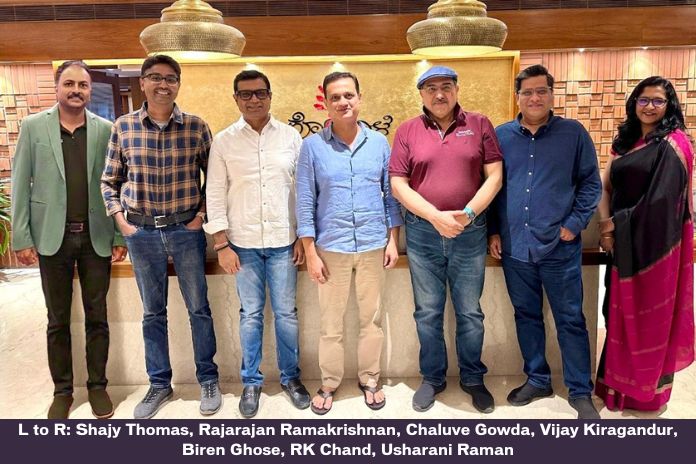
Founded by four former senior executives from Technicolor India’s shuttered empire—Biren Ghose, RK Chand, Rajarajan Ramakrishnan, and Shajy Thomas—and backed by Hombale Group (the powerhouse behind KGF, Salaar, and Kantara) along with Perpetual Capital, Astra Studios represents more than just another VFX house rising from corporate ruins.
It’s a bold bet that the future of content creation lies at the intersection of human artistry and artificial intelligence. The Bengaluru-headquartered Astra Studios has begun operation with 100+ techs and artists in Whitefield. “We’re not just rebuilding. We’re redefining what excellence looks like in a post-AI, multi-platform, multi-format content world,” said Biren Ghose, Founder & CEO of Astra Studios.
What are the learnings from this story? What direction is the content production industry taking? How will technologies in the production of VFX be altered?
The meltdown of companies in animation and VFX shutdown isn’t merely about corporate restructuring—it is symptomatic of deeper industry challenges. Global VFX demand has contracted 10% in 2024, with production volumes falling 24% in the Americas, 7% in EMEA, and 15% in APAC.
In the global context there has been a perfect storm: the post-Covid saturation due to overproduction with platforms began pulling back due to audience fatigue and underperforming titles; the streamers are ending the era of “subscriber growth at all costs” and in the quest for ROI are greenlighting less content with stricter budgets; and the recovery from the Hollywood disruptions has been slow, with layoffs and consolidation still underway.
“We didn’t want to go back. We wanted to go beyond,” says RK Chand, one of Astra’s co-founders and a longtime champion of India’s animation ecosystem. “So we designed a studio from scratch—one that’s lean, scalable, and obsessed with high design & quality,” he summarized.
The Phoenix Strategy: Why Astra Is Different
What sets Astra Studios apart from typical post-collapse start-ups is both its timing and its philosophy.
Rather than simply recreating what existed before, the founding team has designed what they call a “content studio first” approach that treats AI not as a threat, but as a creative amplifier.
“Astra is radically different—not just in how we produce, but in why we exist. We’re designing a studio built for what’s next, where creative talent and intelligent tools co-evolve,” explains Biren Ghose. “The core of Astra is its “Artist-First, AI-Ready” philosophy.”
This isn’t just marketing rhetoric. The studio’s core focus areas represent a fundamental rethinking of content production:
End-to-End Creative Solutions: From ideation through post-production, integrating GenAI throughout the pipeline
Original IP Development: Character universes designed to live across formats—films, games, immersive media
Immersive Experiences: AR/VR and location-based media that extend beyond traditional screens
Premium Animation: Both streaming and theatrical content built with AI-assisted workflows
The Hombale Advantage: Strategic Investment Meets Creative Vision
The backing from Hombale Group represents more than financial support—it’s a strategic alliance that addresses one of the Indian content industry’s greatest challenges: the transition from service provider to IP creator. Hombale, which has invested ₹3,000 crore over five years in developing pan-India content franchises, brings proven expertise in building culturally rooted stories with global appeal.
“We are supporting the vision behind Astra Studios to help grow stories and movie franchises across different platforms using emerging technologies,” says Vijay Kiragandur, Hombale Films founder. “This will enable the Hombale Group to undertake projects with greater scope and complexity to create powerful new ‘storyworlds’ for our franchise fandoms.”
The partnership addresses what Chand, also Astra’s Chief Business Officer, identifies as a critical market shift: “We’re witnessing a major shift where technology is democratizing content creationGenAI platforms are enabling creators to produce high-quality visuals, characters, and scenes, free from the constraints of traditional pipelines..”
The Technology Revolution: Beyond Traditional VFX
What makes Astra’s approach genuinely innovative is its integration of AI throughout the creative pipeline, not just in post-production.
Shajy Thomas explains their philosophy: “We follow a principle of ‘technology in the service of storytelling’.’ That means before onboarding any cutting-edge tool, we evaluate its creative impact, its integration risk, security, and its potential to scale across teams and projects.”
The studio’s technology stack represents a fundamental shift from the rigid, hierarchical pipelines that characterized mega-studios like the brands at Technicolor. Instead, they’re building what Shajy Thomas calls “a next-gen content pipeline that is agile, intelligent, and format-agnostic” that combines:
Smart studio workflows with AI integration
Real-time engines for immediate iteration
Modular, API-driven ecosystems
Cloud-native, scalable infrastructure
This technical foundation enables what Rajarajan Ramakrishnan, the Chief Creative Officer, describes as “format-fluid and culturally rich” storytelling—narratives that can move seamlessly “between screens, platforms, and experiences.”
Market Disruption: The Democratization Effect
The broader implications of Astra’s approach extend far beyond one studio’s success. As Chand notes, the democratization of content creation tools is enabling “a new wave of direct-to-consumer (DTC) creators, indie filmmakers, and start-ups to build, launch, and monetize content faster than ever—across not just film or TV, but immersive XR, interactive web series, and digital experiences.”
This shift addresses one of the Indian content industry’s persistent challenges: moving beyond service-based execution to IP ownership and global distribution. With India’s media and entertainment sector valued at ₹2.5 trillion but generating only $2.1 billion from its 551 million OTT users—well below market potential—the opportunity for new approaches is substantial.
The timing is particularly significant given the state of the global VFX industry. Established players like Framestore, Industrial Light & Magic, and Wētā FX are facing their own challenges, creating an opening for studios that can combine cost efficiency with creative innovation.
The Perpetual Capital Connection: Financial Innovation
The involvement of Perpetual Capital represents a different kind of backing than traditional VFX studios typically receive.Rather than being funded by media conglomerates or private equity focused on quick returns, Astra benefits from investors who understand long-term value creation in emerging markets..
This financial structure enables what the founders describe as patient capital with a belief in the development of IP, creating a new generation of talent and tech. As Thomas notes, “The goal is never to chase tech trends but to integrate tools that genuinely serve the creative vision and improve the production process.”
Industry Impact: Beyond the Studio Walls
The emergence of Astra Studios comes at a critical moment for India’s animation and VFX industry. The sector, which saw revenues decline 14% in 2024 due to global disruptions, needs new models that can weather industry volatility while capitalizing on India’s talent advantages.
“India is at an inflection point in the global content arena, and Astra aims to lead that evolution, creating new jobs while continuing to partner with creatives globally,” Biren Ghose emphasizes.
This ambition responds to the broader industry criticism that India’s content sector is still trapped in a service-provider mentality. As one industry analysis noted: “For Indian VFX and digital design firms, the way forward is not just service-based execution. The future lies in owning IPs and digital assets—creating original content instead of always executing for others.”
A New Business Model
Like the most successful start-up stories chronicled in the pink pages, Astra’s emergence reflects broader technological and economic shifts that create opportunities for nimble, well-funded challengers to disrupt established industries.
The studio’s approach mirrors successful tech company pivots: taking established expertise, applying emerging technologies, and targeting underserved market segments. In this case, the underserved market segment is the growing demand for AI-integrated content creation, which traditional studios have been slow to address.
The founders’ backgrounds provide credibility—they know intimately both what worked and what failed at one of the industry’s largest players. Their investor backing provides the resources to build something genuinely different rather than simply recreating the past.
Most importantly, their timing aligns with fundamental industry shifts: the democratization of content creation tools, the global expansion of streaming platforms, and the emergence of AI as a creative amplifier rather than a replacement.
Looking Forward: The Next Chapter
As Astra Studios begins operations, it faces the challenge of delivering on ambitious promises while navigating an industry still reeling from recent disruptions. The founders’ confidence reflects both their extensive experience and their conviction that they’ve identified a genuine market opportunity.
“The takeaway from our meeting was that they just did not want to recognize what was ‘normal!’ They are hands and knees into the next—not wanting to just hire back talent, but to amplify it,” notes one industry observer.
Their ambition extends beyond simply creating successful projects: “At Astra, narrative and technology don’t just coexist—they co-compose. From AI-assisted pipelines to design-led worldbuilding, we want to add value to stories that shall move minds and markets,” said Ghose.
Whether Astra Studios can deliver on these grand ambitions remains to be seen. But in an industry desperately seeking new models for sustainable, creative, and technologically sophisticated content creation, their emergence represents exactly the kind of bold reimagining that economic disruptions often catalyze.
The collapse of Technicolor marked the end of an era. The rise of Astra Studios—and similar studios—may well mark the beginning of the next era in content creation.
As one founder put it, “The stars are my compass, and the future is my destination”—he was probably looking upwards at the Astra Universe!
Founder Insights: Reimagining the Creative Process
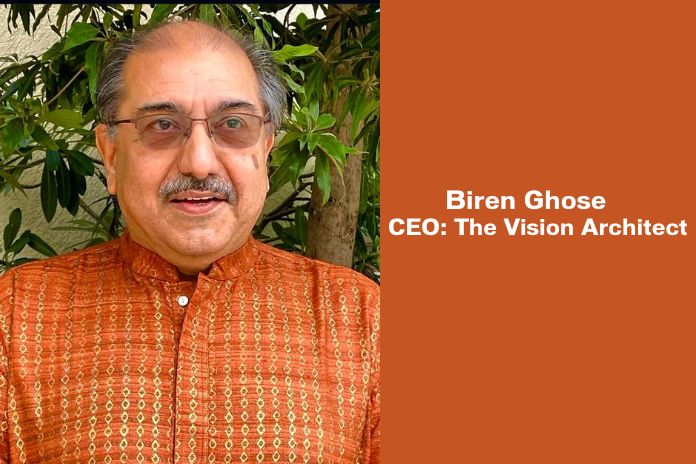
Biren Ghose – CEO: The Vision Architect
As the former head of Technicolor India who witnessed first-hand both the company’s capabilities and ultimate failure, Biren Ghose brings unique insights into what the next generation of content studios must look like.
“We intend to be different from the large-scale content ‘factories’ by being more boutique and applying the intuitive logic of design-led innovation,” he explains. “Our clean slate starting position allows us to design bespoke creative systems, blending human artistry with AI intelligence in real time.”
His vision extends beyond traditional VFX work: “We’re developing bespoke GenAI tools, artist-led design, and co-creating workflows to evolve how new age content is imagined and produced.”
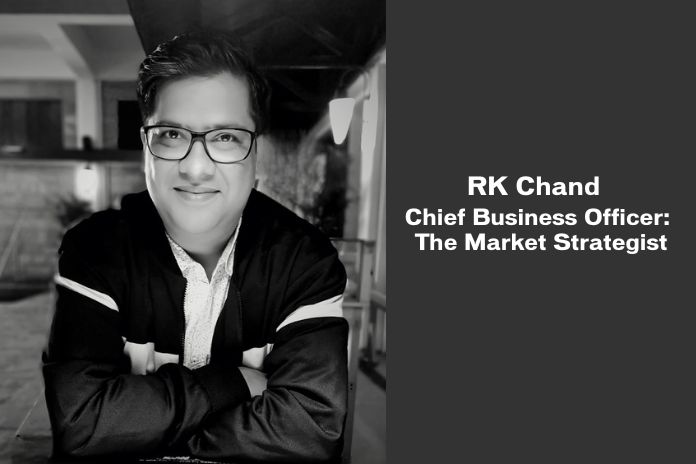
RK Chand – Chief Business Officer: The Market Strategist
With deep experience in global client relationships, Chand sees Astra’s opportunity in the convergence of technology democratization and market expansion.
“Global clients want more than output — they want collaboration, context, and co-creation. Astra is here to be a strategic ally, not just a vendor,” he emphasizes.
His approach to IP development reflects this collaborative philosophy: “Our IP strategy combines rapid prototyping with real-time engines, AI-powered world-building, and virtual art departments. We focus on original concepts that can live across formats — films, games, immersive media, and web-based experiences.”
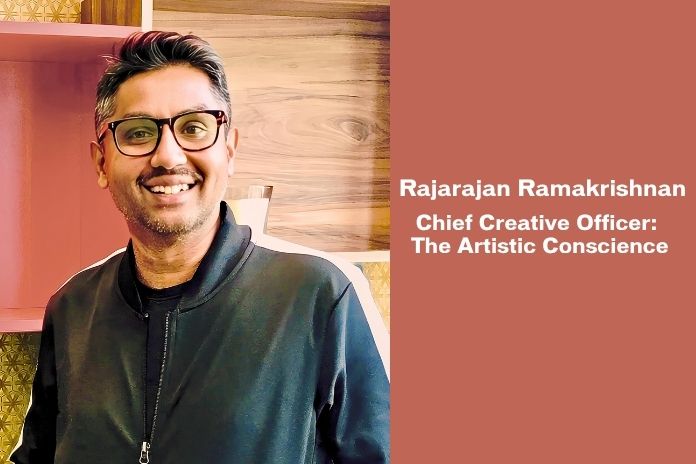
Rajarajan Ramakrishnan – Chief Creative Officer: The Artistic Conscience
As the creative leader, Ramakrishnan addresses the industry’s biggest concern: how to maintain artistic integrity in an AI-driven world.
“I firmly believe the creative eye and aesthetic sensibility will remain paramount, even as GenAI and ML tools revolutionize our craft. These technologies are extraordinary amplifiers of creativity, but they lack the soul, intent, and nuanced perspective that human artists bring,” he states.
His vision for the future is both pragmatic and inspirational: “GenAI and ML are like the ultimate paintbrush—capable of incredible feats but only as impactful as the hand wielding it. The creative eye and aesthetic sensibility will always be the guiding force, shaping raw technology into art that inspires, challenges, and moves.”
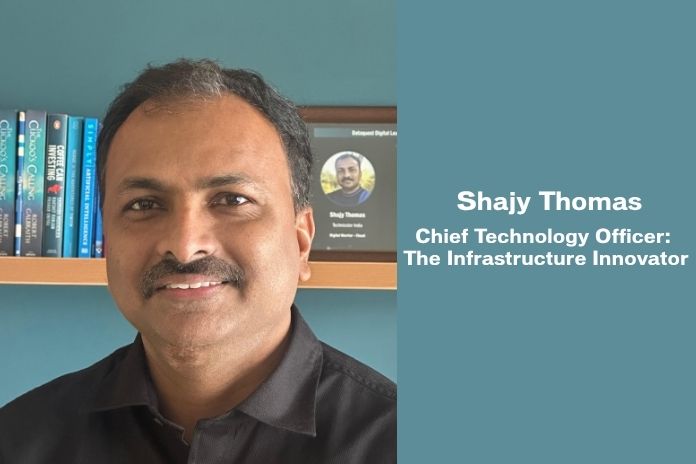
Shajy Thomas – Chief Technology Officer: The Infrastructure Innovator
Shajy Thomas brings the technical expertise to realize these ambitious visions, focusing on building systems that can scale with both artistic ambition and technological capability.
“Our pipelines shall be built to flex, adapt, and empower — not just for today’s demands, but for the media ecosystems emerging around us,” he explains.
His approach emphasizes modularity and intelligence: “The infrastructure for content production is rapidly evolving toward hybrid, scalable, and intelligent systems, combining cloud-native workflows, real-time engines, and AI-assisted automation.”
Highlights

Tom Cruise’s ‘Top Gun: Maverick’ to Blaze at Cannes

India Pavilion at Toronto International Film Market 2019

Entries called for Cannes XR Future Award contest

TIFF Reveals Plans for Industry Conference

Films by Shekhar Kapur and Shubham Yogi Selected for Toronto Gala

A Selection to Die for

Le Musk: A Brave New Frontier in Cinema

The Path finder: Jyoti Deshpande

Toonz to Honour Aabid Surti, Biren Ghose at Animation Masters Summit

India is the Country of Honour at Cannes

RAVINDRA VELHAL: DRIVING MEDIA TRANSFORMATION

THE PATH FINDER: JYOTI DESHPANDE

INTO THE WORLD OF RRR

Powerkids Appoints Manoj Mishra as CEO

Toonz Join Tunche Films to Co-Produce Spanish-Peruvian Animation Feature Kayara

National Museum of Indian Cinema Hosts Vintage Vehicles

I&B Secretary promises Govt’s Support to Film industry

Illumination’s Minions: The Rise of Gru is the Annecy Festival Opener

Now, Shoot at Sight in India!

Lata Mangeshkar, India’s Singing Goddess

Quantum Image Making Has Arrived

Indian Films To Look Out For In 2022

2022: Centenary of Indian Cinema Legends

Singing Legend Lata Mangeshkar, Nightangale of India, Dies at 92