How India Can Build Momentum for Talent, Scale, and Global Reach in the M&E Industry
By Pickle February 11, 2026
Share:


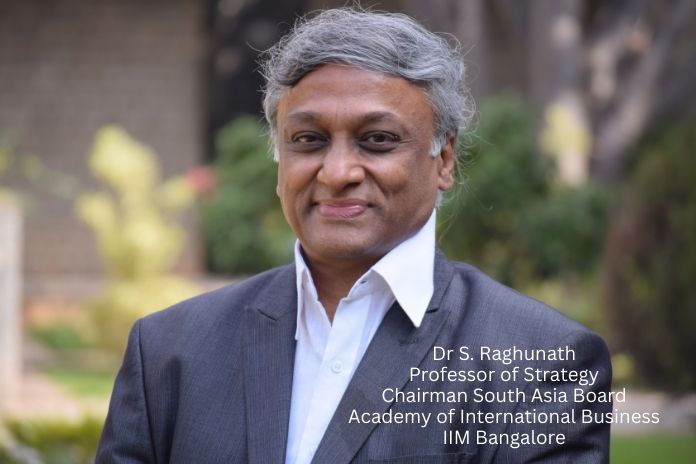
Authentic Indian storytelling, rooted in cultural depth and crafted with global standards, is key to scaling the M&E industry. By nurturing talent, production, and export strategies, India can transform local narratives into global cinematic powerhouses.
By Dr S. Raghunath
Film theory increasingly recognizes a paradox that is about how the more culturally grounded a story is, the more emotionally universal it becomes. I would like to allude to the work of anthropologist Clifford Geertz’s concept of “thick description,” which suggests that detailed cultural context invites empathy rather than alienation. Audiences decode meaning through recognizable human experiences such as longing, ambition, injustice, and love, even when expressed in unfamiliar settings.
Platforms report that subtitled, culturally dense series often retain high completion rates because emotional stakes override linguistic barriers. The success of Indian regional dramas such as Heeramandi, The Family Man, Dabba Cartel, Gullak, Patal Lok, Delhi Crime, and Maamla Legal Hai on global streaming charts illustrates how subtitles have transformed language barriers into a culture-informing bridge for international audiences.
“Scaling India’s M&E industry requires coordinated investment in talent, production excellence, and export strategies to transform episodic success into sustained global presence.”
Contrary to early fears of cultural flattening, streaming platforms increasingly reward distinctive storytelling. Recommendation systems favor content that generates high engagement and word-of-mouth, traits often linked to novelty and specificity. Indian content that performs globally tends to exhibit strong narrative identity, clear cultural texture, and emotional stakes that encourage sharing.
A Tamil or Malayalam crime thriller with regional authenticity, such as Officer on Duty, Kishkindha Kaandam, Psycho, or Anjaam Pathira, becomes algorithmically visible precisely because it differs from dominant western templates. Distinctiveness turns into discoverability. Indian storytelling offers social complexity, moral ambiguity, and a hybrid of the modern-traditional worlds. These elements align with global audience curiosity about rapidly changing societies.
International co-productions increasingly value cultural authenticity as creative currency. For example, an Indo-European co-production retains an Indian narrative perspective while accessing international financing, post-production resources, and festival circuits. The result is a film that travels without cultural censor. This reflects cultural theorist Homi Bhabha’s idea of the “third space” representing creative hybridity where local identity engages global frameworks without losing integrity.
What is the way forward with scaling? Authentic storytelling requires creators who are culturally fluent and institutionally supported. Talent incubators, script labs, and festival mentorship programs build what scholars call narrative confidence, the ability to tell culturally specific stories without external validation.
“Building narrative confidence through talent incubators and cultural story labs empowers creators to tell authentic, globally resonant stories.”
Writers’ rooms trained to prioritize lived experience over imitation produce stories that deeply resonate. This authenticity fuels both domestic loyalty and international intrigue. The strategic implication is that authenticity should not be treated as a niche segment but as a core export philosophy. Coordinated investment in talent incubation, festival pipelines, co-production frameworks, platform partnerships, and data-informed commissioning can transform episodic international success into sustained cultural presence. India’s opportunity is not merely to export films but to cultivate global narrative ecosystems where Indian creators consistently contribute to world cinema discourse.
Global scale emerges when a creative ecosystem deliberately builds authentic talent that drives culturally confident production through strategically designed export pathways. This is not accidental success. It is a carefully crafted pipeline.

We can structure the global scaling playbook in three integrated layers, each feeding the next.
1. The first being the talent layer building narrative confidence.
The objective of this layer is to develop creators who trust their cultural voice and possess the craft to make it intelligible globally. This layer determines whether identity becomes an asset or source of insecurity. Most talent programs teach craft. Few teach cultural authorship. The intent should be to develop “Writers’ Rooms Focused on Lived Reality.” Train writers to mine regional social experience in family structures, labor realities, moral dilemmas, and urban/rural transitions. Encourage multilingual storytelling, and promote the view that dialect is texture, not a barrier.
Regional OTT hits emerged from writers deeply embedded in local contexts rather than imported templates. Develop “Cultural Story Labs,” which offer fellowship programs pairing creators with historians and sociologists with linguists.
“Distinctive Indian storytelling, rich in social complexity and moral ambiguity, turns cultural specificity into global discoverability.”
Build “thick description” capacity that is storytelling grounded in social reality. The outcome will be narratives that travel because they feel lived-in, not fabricated. Offer showrunner & creative leadership training. Teach narrative architecture, pacing, and platform literacy. Focus on how to make local stories globally understood without dilution. The talent incentive must be designed to reward originality, not imitation. Offer development grants for regionally anchored scripts. Offer festival lab scholarships and mentorship pipelines with internationally exposed creators.
2. The second layer is the production layer scaling authentic storytelling.
The objective is to transform culturally grounded scripts into globally competitive productions. This is where identity meets craft infrastructure. The production design philosophy is for global audiences to accept unfamiliar worlds. Invest in cinematography, sound design, and editing parity with global benchmarks. Authentic storytelling does not mean license to nurture low technical ambition. Focus on cultural production design. location authenticity, costume realism, language integrity, and socio-spatial accuracy. These increase immersion and emotional credibility.
“Subtitled, culturally dense Indian series like Heeramandi and Patal Lok show how language barriers become bridges to international viewers.”
Use co-production architecture and use it to scale. Maintain narrative authority in Indian hands. Utilize partners for financing post-production distribution access and festival strategy. Identity must remain local as scale becomes global. Treat platforms as ecosystem partners. Create joint development pipelines for culturally rich narratives. Platforms amplify stories that show strong engagement signals. Track production metrics such as completion rates, cross-market performance, critical reception, festival circulation, and social discourse intensity. This data can inform future commissioning.
3. The third layer is the export layer. Designing Global Reach with the objective to enhance discoverability and legitimacy pathways.
Identity does not scale automatically; it must be curated into global circuits. The festival strategy offers market entry. Festivals are cultural translators. Dedicated festival campaign units, international PR narratives, and critic engagement are significant steps. A festival premiere reframes Indian storytelling within global discourse.
“The more culturally grounded a story is, the more emotionally universal it becomes,” enabling Indian narratives to connect deeply with global audiences.”
We must recognize that diaspora and curiosity markets are two separate audience engines. Diaspora consists of early adopters and amplifiers. Curiosity audiences seek distinctive global narratives. Design marketing to bridge both. Improve subtitling & localization excellence by supporting culturally intelligent subtitling, tone preservation, and rhythm-sensitive dialogue adaptation. We must be aware that poor localization might undermine emotional impact.
When the ecosystem deliberately builds talent confidence, production excellence, and export intelligence, authenticity becomes not a niche aesthetic but a scalable industry engine. That is how fascination turbocharges global presence.
Highlights

GET READY for EUROPEAN FILM MARKET 2020

Microbudget Films Aren’t Getting Covid Coverage

IMI unveils Top 20 International Singles Charts India

TIFF Reveals Plans for Industry Conference

Films by Shekhar Kapur and Shubham Yogi Selected for Toronto Gala

A Selection to Die for

Le Musk: A Brave New Frontier in Cinema

The Path finder: Jyoti Deshpande

Toonz to Honour Aabid Surti, Biren Ghose at Animation Masters Summit

India is the Country of Honour at Cannes

RAVINDRA VELHAL: DRIVING MEDIA TRANSFORMATION

THE PATH FINDER: JYOTI DESHPANDE

INTO THE WORLD OF RRR

Powerkids Appoints Manoj Mishra as CEO

Toonz Join Tunche Films to Co-Produce Spanish-Peruvian Animation Feature Kayara

National Museum of Indian Cinema Hosts Vintage Vehicles

I&B Secretary promises Govt’s Support to Film industry

Tom Cruise’s ‘Top Gun: Maverick’ to Blaze at Cannes

Illumination’s Minions: The Rise of Gru is the Annecy Festival Opener

Now, Shoot at Sight in India!

Lata Mangeshkar, India’s Singing Goddess

Quantum Image Making Has Arrived

Indian Films To Look Out For In 2022

2022: Centenary of Indian Cinema Legends