Chandrajit Banerjee Outlines Six-Point Skills Blueprint
By Pickle March 9, 2026
Share:


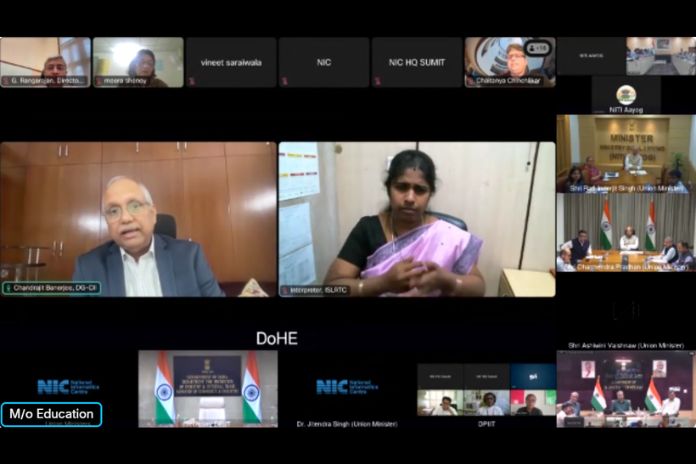
Confederation of Indian Industry (CII) Director General Chandrajit Banerjee presented a six-point plan at Post Budget Webinar aiming to align skills, industry, and innovation in India’s post-Budget reform blueprint
A sharper, skills-driven roadmap for India’s education-to-employment transition took center stage at a recent high-level webinar with Confederation of Indian Industry (CII) Director General Chandrajit Banerjee presenting a comprehensive six-point action plan to guide post-Budget reforms. Chandrajit Banerjee’s proposals aim to align skilling, industry, and innovation in a coordinated national push, translating Budget promises into real-world opportunities.
He was addressing the concluding session of the Post Budget Webinar on the theme “Sabka Saath Sabka Vikas – Fulfilling Aspirations of People.”
AI-Driven Centres of Excellence: Sectoral Hubs for Innovation
Reporting from the breakout session on “higher education to employment and enterprise,” Chandrajit Banerjee’s first priority was clear: India must develop AI- and tech-enabled centres of excellence with sharp sectoral focus—covering fields from agri-tech and health-tech to tourism and digital services. “Each hub should be rooted in a specific domain, anchoring research, training, and enterprise creation directly to market needs,” Chandrajit Banerjee emphasized.
He called for these hubs to be public–private platforms involving government, industry, and academia, rather than isolated academic projects. States, he suggested, should lead in building clusters aligned to local industrial strengths, making the model both federal and context-specific.
A Shift to Skills-First Education
Chandrajit Banerjee’s second recommendation is a decisive move from degree-centric learning to a “skills-first” education ecosystem. He urged mainstreaming skills-based learning within curricula and aligning it with fast-evolving workplace technologies. “Employability must be embedded at the core of curriculum design,” he stressed, advocating for continuous, industry-led certifications and programs that blend technical proficiency with creativity, critical thinking, and problem-solving.
Institutionalizing Industry–Academia Partnerships
The third pillar calls for making industry–academia partnerships routine rather than the exception. Chandrajit Banerjee noted that bridging the gap between learning and employment is “critical,” and called for expanding internships, industry immersion, and practical project experiences. He recommended that local industries be linked more closely to nearby educational institutions, forming active clusters that drive research, job creation, and enterprise at the regional level.
Scaling Research, Innovation, and Applied Learning
Chandrajit Banerjee’s fourth recommendation focused on scaling up India’s research and innovation ecosystems. He called for increased private-sector investment in R&D, shared innovation platforms, and the development of regulatory and technological sandboxes. The emphasis, he said, must be on applied research that creates new enterprises and accelerates technology adoption, giving students hands-on exposure to real-world problem-solving.
Jobs, Not Job Losses, in a Tech-Driven Era
Addressing concerns about job displacement in an age of rapid automation, Chandrajit Banerjee argued that every industrial revolution has created new types of jobs. “India can and shall adapt to emerging industry demands,” he declared, provided that skilling systems remain agile and anticipatory. The focus, he suggested, should be on continuously reskilling and upskilling the workforce to harness technological change.
Coordinated Policy and Measurable Outcomes
Finally, Chandrajit Banerjee underscored the need for tightly coordinated policy and rigorous outcome measurement. He urged alignment between the Centre, states, and industry to avoid fragmented efforts, suggesting robust tracking through clear indicators—employment generation, enterprise creation, and technology adoption among them. “Implementation at scale will depend on collaborative excellence at all levels,” he said.
He concluded with a call to action: the government, industry, and academia must jointly translate these frameworks into tangible hubs, programs, and jobs. The Budget’s vision for education-to-employment reform, he insisted, can only be realized through sustained, collective effort and relentless execution on the ground.
Highlights

TIFF Reveals Plans for Industry Conference

Films by Shekhar Kapur and Shubham Yogi Selected for Toronto Gala

A Selection to Die for

Le Musk: A Brave New Frontier in Cinema

The Path finder: Jyoti Deshpande

Toonz to Honour Aabid Surti, Biren Ghose at Animation Masters Summit

India is the Country of Honour at Cannes

RAVINDRA VELHAL: DRIVING MEDIA TRANSFORMATION

THE PATH FINDER: JYOTI DESHPANDE

INTO THE WORLD OF RRR

Powerkids Appoints Manoj Mishra as CEO

Toonz Join Tunche Films to Co-Produce Spanish-Peruvian Animation Feature Kayara

National Museum of Indian Cinema Hosts Vintage Vehicles

I&B Secretary promises Govt’s Support to Film industry

Tom Cruise’s ‘Top Gun: Maverick’ to Blaze at Cannes

Illumination’s Minions: The Rise of Gru is the Annecy Festival Opener

Now, Shoot at Sight in India!

Lata Mangeshkar, India’s Singing Goddess

Quantum Image Making Has Arrived

Indian Films To Look Out For In 2022

2022: Centenary of Indian Cinema Legends

Singing Legend Lata Mangeshkar, Nightangale of India, Dies at 92

Bhushan Kumar’s T-Series Ventures Into OTT Content Creation Space

What’s India Looking for at European Film Market