India-Japan Continuum: From Buddhism to Bollywood
By Pickle May 11, 2026
Share:


Two celebrated maestros laid the foundation in the 1950s. Muthu built upon it a few decades later. Today, the emerging synergy between the two dynamic movie industries is excitingly extensive
By Saibal Chatterjee
Japan, which has one of the world’s oldest and largest film industries, is the Country of Honour at Marche du Film 2026. It is the fifth nation to be accorded this recognition. The first was India in 2022, which marked the 75th year of the nation’s Independence as well as of the Cannes Film Festival itself.
The variegated linkages between India and Japan go beyond cinema and straddle the domains of spirituality, culture and wide-ranging diplomatic and business partnerships. The ties run deep and go back all the way to the 6th century when Buddhism arrived in the country from India.
As civilizational commonalities have widened and become stronger, films have remained a key area of give and take between the two countries. In the seven decades since India gained Independence, cinema has contributed significantly to the strengthening of Indo-Japanese ties.
Filmmakers of the Golden Age of Japanese cinema – Yasujiro Ozu, Kenji Mizoguhi, Shohei Imamura, Nagisa Oshima and Akira Kurosawa – were all the rage on the thriving film society circuit in India for several decades. In more recent times, the likes of Takeshi Kitano, Takashi Miike, Sono Sion, Kiyoshi Kurosawa, Hirokazu Kore-eda and Naomi Kawase – have earned themselves substantial fan followings on the subcontinent.
Japan’s standing on the world stage is best exemplified by the fact that it has as many as five films in the Official Selection of the 79th Cannes Film Festival, including three in Competition. In addition, Japan has an animation film in Directors’ Fortnight.
At the other end of the spectrum, Bollywood, with its penchant for spectacular musical set pieces and hyper-emotive narrative extravaganzas, is a conduit through which India’s soft power has percolated into Japan, drawing many youngsters into its folds and enthusing them to not only watch these films but also occasionally travel to India to learn the dance moves.
The Northeast Indian state of Nagaland has a strong underground anime and manga subculture, which was highlighted and celebrated by filmmaker Hemant Gaba in the 2017 documentary, Japan in Nagaland.
The film made for Doordarshan and Public Service Broadcasting Trust (PSBT) turned the spotlight on Nagaland Anime Junkies (NAJ), a Facebook group started in 2011. When the documentary was made, the number of NAJ members had grown from an initial 300 to over 7,000.
The cinematic connection between India and Japan began in very different circumstances in the mid-1950s, when Kurosawa and Satyajit Ray found common ground with each other, thanks to the boundary-pushing films that they made to put their respective countries on the world map.
Ray was, of course, a lifelong admirer of Japanese cinema but it was the work of Kurosawa that was he liked the most. In his book, Our Films, Their Films, the maestro wrote about Rashomon (which he first saw in 1952 in Calcutta): “I saw it three times on consecutive days and wondered each time if there was another film anywhere that gave such sustained and dazzling proof of a director’s command over every aspect of filmmaking.”

Kurosawa was just as impressed with Ray’s Pather Panchali. “I can never forget the excitement in my mind after seeing it… It is the kind of cinema that flows with the serenity and nobility of a big river… Without the least effort and without any sudden jerks, Ray paints his picture, but its effect on the audience is to stir up deep passions. How does he achieve this?”
In the 1990s, Japan was hit by the Muthu phenomenon. The 1995 Rajinikanth starrer was released in the country in 1998 as Muthu: Oduru Maharaja (Dancing Maharaja). It ran for 23 weeks. It raked in big bucks at the box-office, turned Rajinikanth into a superstar, and sparked massive interest in Indian popular cinema among Japanese moviegoers.
In 1993, a unique collaboration between Japanese animators and the Indian doyen of the animation filmmaking, Ram Mohan, yielded Ramayana: The Legend of Prince Rama.

The film, directed by Ram Mohan and Japanese filmmaker Yugo Sako to commemorate the 40th anniversary of the establishment of diplomatic relations between the two countries, is one of the most definitive adaptations of the Indian epic.
A digitally remastered 4K version of the film was re-released in India in early 2025. The film seamlessly blends elements of Japanese anime with pictorial styles inspired by the works of Raja Ravi Varma.
“The coalescence of distinct visual traditions is the most pronounced in the figure of Sita. In her are blended strokes rooted in the imagination from which Snow White originated, lines that evoke Hayao Miyazaki’s artistry and eye for detail, and the aura of a goddess right out of a portrait adorning the wall of an Indian living room. The film is a joy to behold.” this critic wrote in his review when the film hit Indian multiplexes in January 2025.

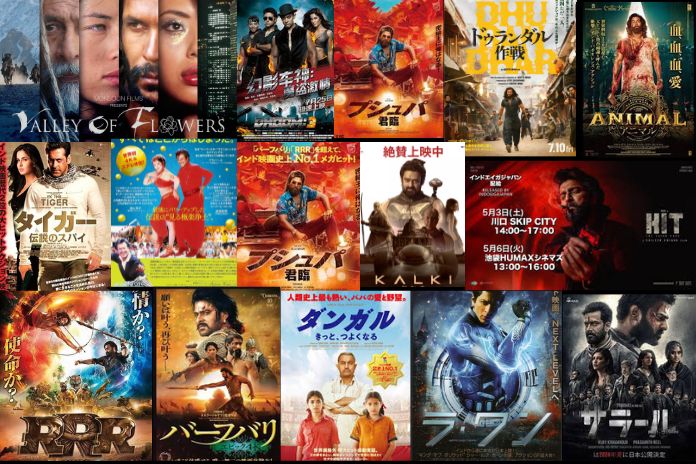
Numerous Indian films have since found takers in Japan. And not all of them have been big-budget entertainers. Besides the Rajinikanth hit Enthiran (Robot), Indian blockbusters like Baahubali and RRR have found their way into Japan. In fact, RRR is the highest-grossing Indian film in Japan ever.
Other films like 3 Idiots, Dangal, PK, Dhoom 3, Ra,One, Ek Tha Tiger, Magadheera, Om Shanti Om and Bajrangi Bhaijaan have been distributed in Japan. At the other end of the spectrum, an off-mainstream Mukti Bhawan (Hotel Salvation, 2016), directed by debutant Shubhashish Bhutiani and starring Adil Hussain, had unprecedented success in Japan.

Released on 30 screens across the country, Mukti Bhawan ran for over 150 days. It was released by Bitter Ends Inc, a film distribution company that specializes in showcasing independent cinema.
Several of the commercial Hindi and Tamil films that have played in Japan in recent years partnered with Nikkatsu Corporation, a film studio founded in 1912.
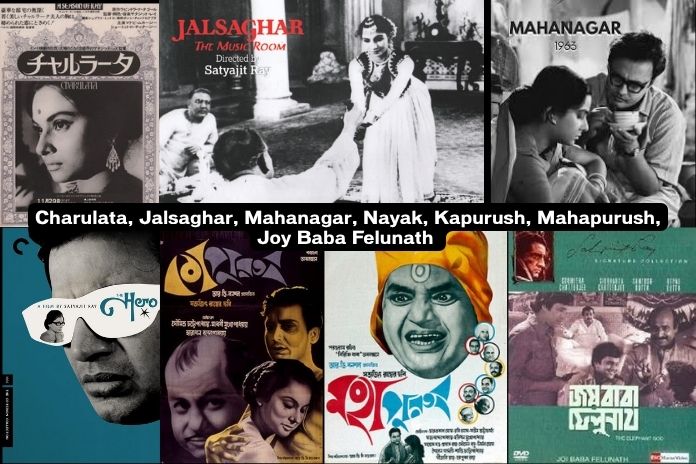
In March this year, seven Satyajit Ray films – Charulata, Jalsaghar, Mahanagar, Nayak, Kapurush, Mahapurush and Joy Baba Felunath – were released in Japan in theatres as well as on VOD and home video.
A distribution outfit, Celluloid Japan, has brought several Malayalam films to Japan over the past decade. The titles include Aadujeevitham, Take-Off and Angamaly Diaries.
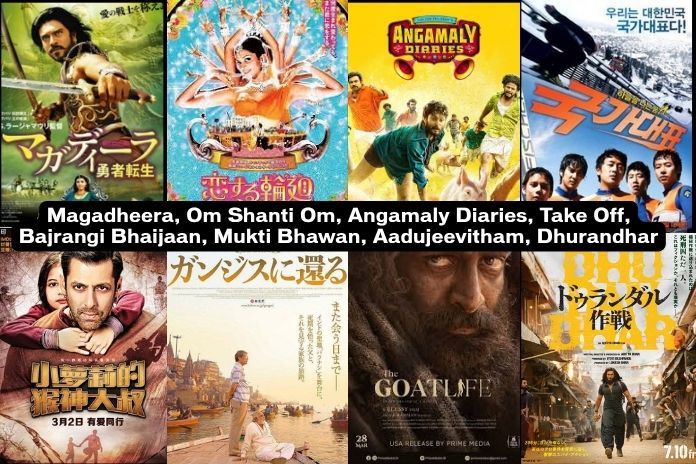
Dhurandhar is now set for release in Japan on July 10.
The India-Japan interaction in the world of cinema has assumed unusual forms of late. While Japanese anime is a big draw in India, Japan has served as the backdrop for several Indian films.
The most recent Indian productions to be shot in Japan are Mohit Takalkar’s lively Marathi-language relationship drama Toh Ti Ani Fuji (now streaming in SonyLIV) and the Aamir Khan-produced Hindi film Ek Din, starring Sai Pallavi and Junaid Khan and released on May 1.

The first Hindi film to be shot in Japan was the romantic musical potboiler Love in Tokyo, directed by Pramod Chakravorty and starring Joy Mukherjee and Asha Parekh. The very next year saw the release of Aman (Peace), an anti-war drama that addressed the Hiroshima and Nagasaki horrors.
Directed by Mohan Kumar, Aman featured Rajendra Kumar, Saira Banu, Balraj Sahni and Chetan Anand in key roles, besides English philosopher Bertrand Russell in a cameo.
In the new millennium, Pan Nalin travelled to Japan to film Valley of Flowers (2006), starring Milind Soman, Naseeruddin Shah and French actress Mylene Jampanoi.
The film’s story spans across two hundred years – from 19th century Himalayan monasteries to modern-day Tokyo – and explores facets of Indian and Japanese mysticism.
In Nalin’s own words, his aim was to make “the greatest Asian love story…an unforgettable tale about passion, death and reincarnation”.
He describes the film as “a mesmerizing Himalayan epic that spans two centuries, from the Silk Route of the early 19th century to the bustling metropolis of modern-day Tokyo”.
Nalin, who is now reportedly working on a proposed project that will be filmed entirely in Japan, made several trips to the country in 2023 for the release of India’s Oscar submission Chhello Show (Last Film Show), distributed by Shochiku Studio.

In 2010, Bengali filmmaker Aparna Sen directed the critically lauded The Japanese Wife, an unusual cross-cultural love story that takes shape through the means of letters exchanged between a Bengali village schoolteacher played by Rahul Bose and his Japanese pen friend, a role essayed by Chigusa Takaku. The two marry without ever meeting each other and the man remains loyal to her all through his life.
For 40-year-old editor-filmmaker Anshul Chauhan, Japan is a country that he has made his own. Born in Uttar Pradesh and raised in India, he has been making films in Japan since moving there in 2011 as an animation artiste.
Chauhan has made four well-regarded Japanese feature films since debuting with Bad Poetry Tokyo in 2018. He has since then made Kontora (2019), December (2022) and Tiger (2025).
Shot in black and white, Kontora is the first Japanese film ever to bag the Grand Prix at the Tallinn Black Nights Film Festival. Chauhan’s next film, December, won the Grand Prix at the Osaka Asian Film Festival and the Kim Jiseok Award at the 27th Busan International Film Festival.
Chauhan’s fourth feature, Tiger, premiered at the 30th Busan International Film Festival. He, along with Mina Moteki, founded Kowatanda Films, which now has an arm in India that has tied up with actress Shweta Tripathi’s Bandarful Films for Nava, a Hindi horror film set in the wetlands of the Sunderbans.
The writer of Nava, Akash Mohimen, is also developing a Japanese film to be directed by Chauhan sometime next year. Kowatanda Films reportedly has another Japan-set horror film in the pipeline.
Chauhan’s Tiger was shot by cinematographer Vinod Vijayasankaran, who isn’t the first director of photography to make a geographical leap. Japanese DOP Keiko Nakahara, now Mumbai-based, debuted in India with Mary Kom (2014) and has since shot films like Tanhaji: The Unsung Warrior, Shakuntala Devi and Vadakkan.
There is obviously more on the way because Japan and India have much to share.
Highlights

IFFI 50 & Fantastic-Lifetime Achievement Award to Isabelle Huppert

Prateek Vats’ Eeb Allay Ooo! in Berlinale Panaroma

TIFF Reveals Plans for Industry Conference

Films by Shekhar Kapur and Shubham Yogi Selected for Toronto Gala

A Selection to Die for

Le Musk: A Brave New Frontier in Cinema

The Path finder: Jyoti Deshpande

Toonz to Honour Aabid Surti, Biren Ghose at Animation Masters Summit

India is the Country of Honour at Cannes

RAVINDRA VELHAL: DRIVING MEDIA TRANSFORMATION

THE PATH FINDER: JYOTI DESHPANDE

INTO THE WORLD OF RRR

Powerkids Appoints Manoj Mishra as CEO

Toonz Join Tunche Films to Co-Produce Spanish-Peruvian Animation Feature Kayara

National Museum of Indian Cinema Hosts Vintage Vehicles

I&B Secretary promises Govt’s Support to Film industry

Tom Cruise’s ‘Top Gun: Maverick’ to Blaze at Cannes

Illumination’s Minions: The Rise of Gru is the Annecy Festival Opener

Now, Shoot at Sight in India!

Lata Mangeshkar, India’s Singing Goddess

Quantum Image Making Has Arrived

Indian Films To Look Out For In 2022

2022: Centenary of Indian Cinema Legends

Singing Legend Lata Mangeshkar, Nightangale of India, Dies at 92