The Conscience of Indian Animation
By Pickle June 21, 2026
Share:


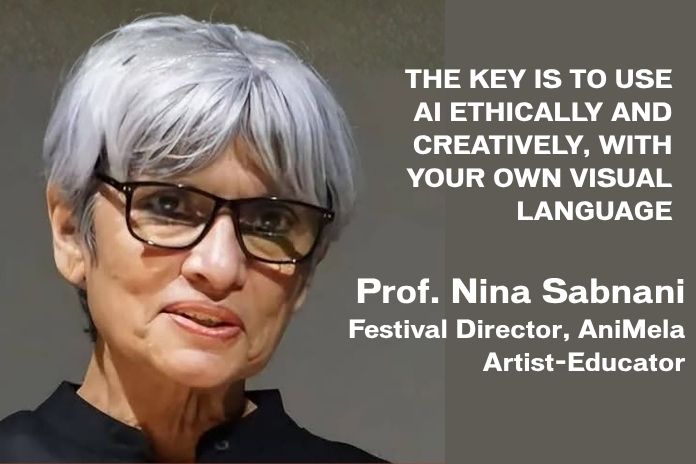
From the Fine Arts Room in Baroda to the Jury in Annecy: How Nina Sabnani Became the Soul of Indian Animation
There is a particular kind of teacher who does not merely transmit knowledge but transforms the very field they enter. Prof. Nina Sabnani is that teacher, that filmmaker, that institution-builder — a woman who arrived in animation almost by accident and, over forty years, remade the discipline from within. She is, without exaggeration, the foundational architect of formal animation education in India.
Born in 1956 in Ahmedabad, Nina Sabnani came of age in one of the most rarified artistic environments that modern India has produced. She earned her Bachelor of Fine Arts in Painting from the Faculty of Fine Arts, Maharaja Sayajirao University, Vadodara (1979) — the legendary Baroda school, which in the 1970s was a constellation of some of the finest artistic minds India has seen. Her teachers were KG Subramanyan, Gulam Mohammed Sheikh, Nasreen Mohamedi, Jyoti Bhatt, and Jeram Patel. These were not professors in the conventional sense. They were thinkers, activists of form, people who believed that art was a form of engagement with the deepest questions of life — questions about identity, memory, community, power. Nina has carried that inheritance into everything she has built.
The Unlikely Turn: From Baroda to NID
When two of her Baroda teachers pushed the young painter toward NID Ahmedabad’s animation programme around 1980, she resisted. Animation meant cartoons. Cartoons meant children. She was a fine artist with other ambitions. The conversation changed when she attended a screening at the Darshan Film Society in Baroda — films from the National Film Board of Canada she had never encountered before. “I thought: this is different. This is not only cartoons.” She applied to NID. She got in. She earned her Certificate in Animation Filmmaking from NID Ahmedabad in 1982.
At NID, the principal instructor was Clair Weeks, a Disney-trained professional, committed to teaching one idiom. But paradoxically, it was his extensive film screenings that cracked open Nina’s imagination — films from the Zagreb school of animation, the Polish school, and above all, Ishu Patel’s visits from the National Film Board of Canada. “Suddenly I felt: there are so many ways to do animation. So many ways to see the world.”
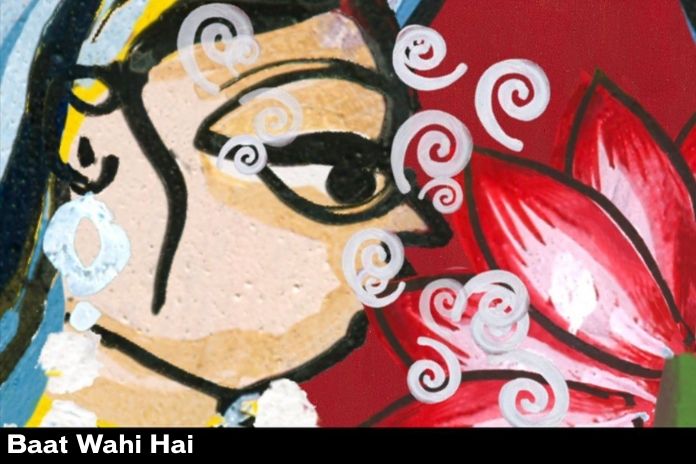
Her first student film, Shubh Vivah, was born from an encounter at an exhibition where Madhubani artists had made four-panel paintings on the dowry system. She wanted to travel to Bihar to work with the original artists; her professor told her it was too dangerous for a young woman to travel at that time (to Bihar). She worked with the paintings from Ahmedabad. It was the beginning of a lifelong practice: animation as collaboration, animation as ethnography, animation as a way of amplifying voices that the mainstream has never thought to hear.
Her second student film was animating an illustrated book: A Summer Story by her teacher KG Subramanyan. It can be found on her YouTube channel to this day.
Building What Did Not Exist: The NID Years (1985–2006)
After graduating, Nina left NID. Then the Canadian animator Ishu Patel came back and urged the institution: Why are you letting these students go? Start the programme. Call them back. NID complied. Nina and her peers were sent abroad on UNDP funding — to Belgium, Holland, the UK — to study animation schools and bring back best practices. Here she was guided by her professor Roger Noake who introduced her to the West Surrey College of Art and Design (now University for the Creative Arts), and where she met Joan Ashworth, later head of animation at the Royal College of Art, who taught her puppet and model animation.
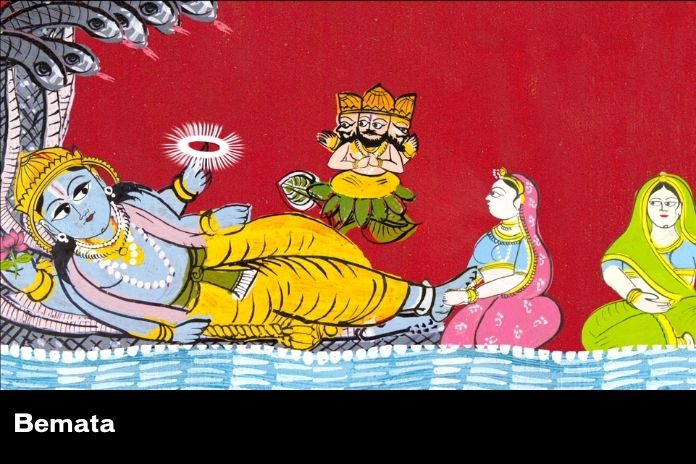
Back at NID, in 1985, she was among the founding faculty of India’s first Advanced Entry Programme in Animation — the single institution in the entire country teaching animation as a formal discipline. Most people only learned on the job then. At the time, there were no digital tools, no YouTube tutorials, no industry precedent. Students worked on film strips, optical cameras, and rostrum tables. A single second of animation required painstaking frame-by-frame labour. Nina taught through all of this, with her colleagues Binita Desai and R L Mistry, building a vocabulary for Indian animation pedagogy from scratch.
Her assistant on her first model animation film at NID was a young man named Dhimant Vyas — a fine arts graduate of talent but uncertain about animation. Nina and her colleague Binita Desai pushed him. “He was unsure and said he didn’t know English. We said, never mind, just come.” He came. He stayed. He became one of the industry’s significant favourite names. This pattern — of seeing potential before the student can see it in themselves — would repeat itself through her entire career.
During these NID years, Nina also helped co-develop the foundational animation curriculum, chaired Communication Design, and produced the first generation of Indian animators who would later define the medium’s visual language in this country. She was, notably, never primarily interested in administration; she was interested in students. “I never did anything for myself. I was totally focused on students, their films, their stories.”
The Fulbright and the Digital Leap (1997)
Every decade or so, Nina gets the urge to disrupt her own settled practice and rebuild from a new foundation. In 1997, she applied for and received a Fulbright Fellowship to study at the S.I. Newhouse School of Public Communications, Syracuse University in New York. It was the era of Hotmail, CD-ROMs, Photoshop, and the first digital tremors. “I learned all the possible software. I was introduced to new media. It opened my mind completely.” She completed her MA in Television, Film and Multimedia at Syracuse (1998) — a degree that would later enable her to pursue her doctoral research at IIT Bombay.
When she returned to NID, at the behest of the then Executive Director, Vikas Satwalekar, she launched a new programme in New Media and Interaction Design — one she ran for close to nine years. The leap from celluloid to digital, from craft-based animation to interactive multimedia: Nina made each transition not as an institutional mandate but as a personal and pedagogical conviction.
IDC and the Second Chapter: IIT Bombay (2006–Present)
In 2006, she made perhaps the most consequential decision of her career: leaving NID for the Industrial Design Centre at IIT Bombay. “My career really took off after going to IDC,” she says simply. NID had begun absorbing her into administration — the fate of every successful academic who refuses to stop growing. IIT offered something different: research funding, institutional freedom, and a culture in which professors are trusted to generate their own intellectual agendas without constant oversight. “In 15 years, I never had to see the director officially. Not once.”
At IDC, as Associate Professor teaching Animation Theory and Visual Communication — and later as PhD Coordinator — Nina finally had the infrastructure to do both her own work and her teaching work at full scale. She hired young people to assist her research. She pursued her doctoral work on the Kaavad storytelling tradition of Rajasthan, the ancient portable shrine-narratives carried by itinerant storytellers who have never attended a school but understand their audiences with a precision that professional communicators would envy.
Her method for this research was not detached observation. She made films with her subjects — giving them creative agency, using their visual and material language as the animation’s skin. Making the film became the research; the act of collaborating taught her things no formal interview ever could. “When you are doing something together, the person will say, ‘Oh, yeah,’ and then you understand something. You learn what to ask only when you are already deep inside.”
She completed her PhD at IDC, IIT Bombay in 2011. Today, she also co-guides PhD students exploring the role of AI in animation pedagogy — ensuring the next wave of researchers has the critical frameworks to handle what is coming.
Nina Sabnani’s filmography is not large in volume. It is immense in depth.
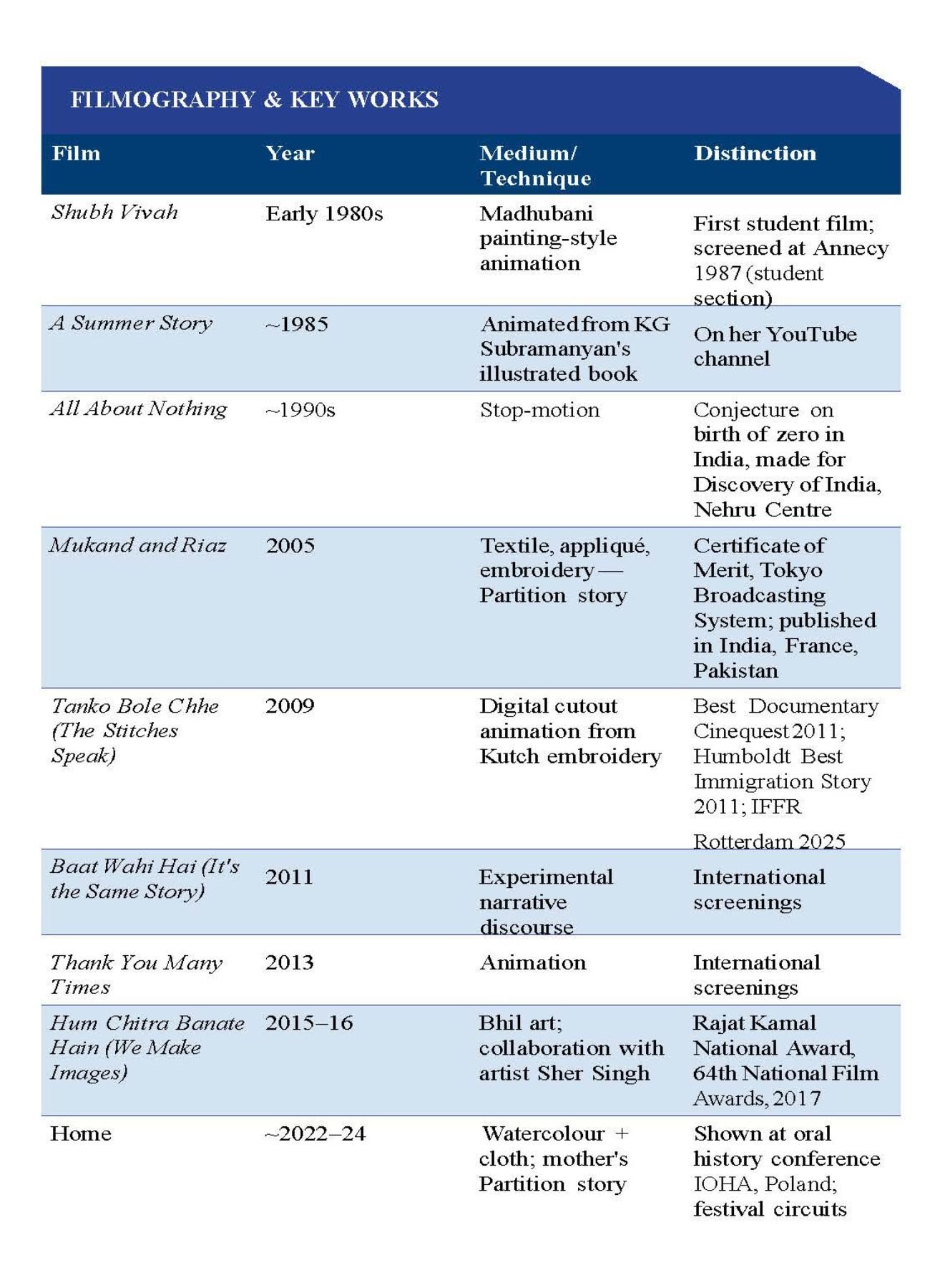
Shubh Vivah (early 1980s) used Madhubani painting to address the dowry system — her first film, made as a student. All About Nothing is a playful stop-motion conjecture about the birth of zero in India. Then came Mukand and Riaz (2005): based on her father’s memories of Partition, it uses the appliqué work common to both Sindh and Gujarat to tell the story of a Muslim boy who helped his Hindu friend and his family cross safely into India by ship. Published as a picture book by Tulika India, Syros Paris (Deux Amis), and Oxford University Press Pakistan, it is one of those rare cross-border stories that dissolves the very borders it depicts.
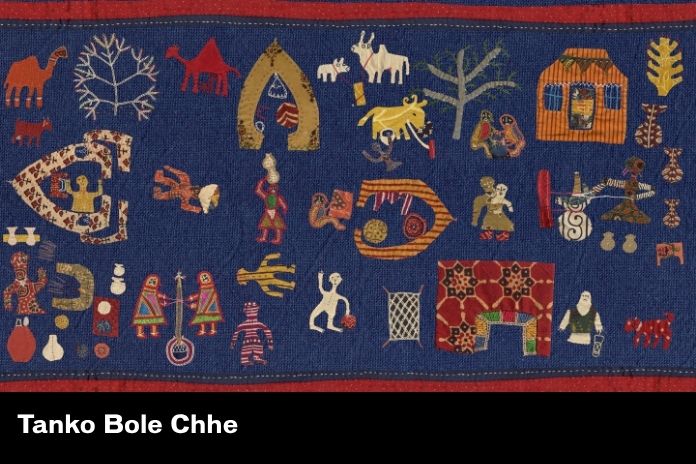
Then came Tanko Bole Chhe — The Stitches Speak (2009), the film that put Nina Sabnani on the global map of animation. Made with artisans associated with the Kala Raksha Trust in Kutch — women who had survived the 2001 earthquake and whose embroideries are their private chronicles — the film uses digital cutout animation built from real embroidered panels. Sliding fabric edges, warping stitches, fraying borders: all carry meaning about migration, loss, and endurance. It won Best Short Documentary at Cinequest 2011, the Stellar Selections Animation Award at Black Maria, the Ledo Matteoli Award for Best Immigration Story at Humboldt Film Festival, and an Honorable Mention at the Iowa City International Documentary Film Festival. When Rotterdam’s IFFR recently curated a special edition on textiles and animation, The Stitches Speak was on the programme. “This film is absolutely local — it talks about a specific group of people, their art, their experience of an earthquake, their embroideries. Everything is subtitled. And yet it is the only film of mine that is still travelling the world.”
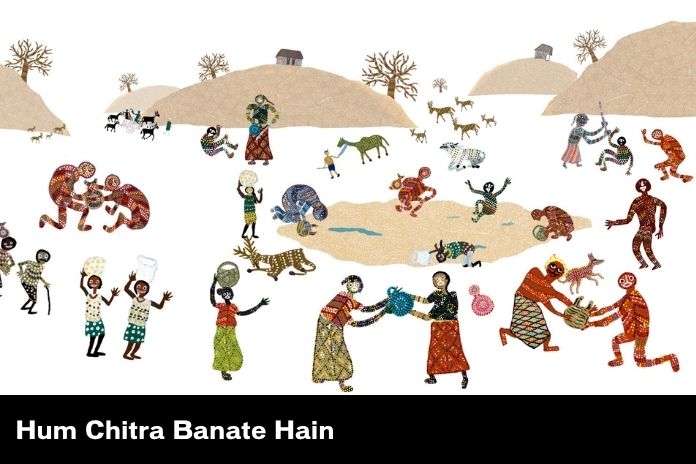
Hum Chitra Banate Hain (2015–16), made in collaboration with Bhil artist Sher Singh from Jhabua, Madhya Pradesh, won the Rajat Kamal National Award for Best Animation Film at the 64th National Film Awards — presented by the President of India. The film is an animated interpretation of a Bhil origin myth about why their community paints. For the Bhil, painting is not decoration; it is prayer.
Her most recent film, Home — about her mother Sheila’s journey through Partition, combining watercolour and cloth as materials of memory — is the most intimate. “Memory is like cloth. It fades, it frays, it tears. But it also stays.” Her mother, who had been adopted by her uncle, later returned to her original parents, crossed continents during Partition. She passed away in 2025. The film has been screened at an oral history conference in Poland; it does not yet have a mass audience, and Nina makes no apologies for that. It has the audience it was made for.
The Teachers Who Refused to Stop
There is something Nina returns to, repeatedly and with visible emotion: her teachers. The Baroda faculty who formed her — KG Subramanyan, Gulam Mohammed Sheikh, Nasreen Mohamedi, Jyoti Bhatt, Jeram Patel —her mentor and former director at NID, Ashoke Chatterjee – continued working until the very end of their lives, or continue working still.
“KG Subramanyan was still talking about his next project the day he died. His 200 drawings were brought to Dakshina Chitra, and I saw them — he was so prolific. Gulam Sheikh is still exhibiting. Jyoti Bhatt, is still at work. Ashoke Chatterjee is still writing on the role of design and designers, How can I stop?” she asks, and the question is not rhetorical — it is her engine.
This lineage of sustained creative commitment — the refusal to retreat into comfort, legacy, or administration — is perhaps the most important thing Nina has transmitted to her own students. Nasreen Mohamedi, too, a major figure in Indian modernism, was her teacher at Baroda — a fact that helps explain the rigorously minimalist aesthetic intelligence that runs through all of Nina’s visual work. These were not merely art teachers. They were examples of how to live an artistic life.
Students Who Are Redefining Indian Animation
She speaks of her students with undisguised pride — and considerable precision. From NID Ahmedabad and IDC IIT Bombay, a cohort of Nina’s former students now occupy frontier positions in Indian animation:
Suresh Eriat— prolific, NID-trained, constantly producing across forms.
- Prosenjit Ganguly (PJ) : NID graduate and independent filmmaker.
- Dhimant Vyas : the young man she pushed into animation without formal English language skills; now a significant industry figure.
- Prakash Moorthy : her first NID graduate who does graphic narratives, designs wildlife interpretation centres and drives production design for a certain kind of cinema.
- Vaibhav Kumaresh : recently released Return of the Jungle film
- Somnath Pal: a former student young enough to be her students’ peer; he independently produced another student’s film out of his own pocket, and that film won an award at Annecy.
- Arnab Chaudhuri: Arnab Chaudhuri was an Indian film director, writer, and animation pioneer known for his groundbreaking work in the Indian animation industry, particularly as the director of the animated feature film Arjun: The Warrior Prince (2012).
- Shamik Majumdar: Shamik is the Creative Director, Original Series – Animation at The Walt Disney Company EMEA. Shamik has played a key role in the development of original animated series & creative supervision for shows in production.
- Sanath P C: Sanath is the co-founder and director of the Firefly Creative Studio (Hyderabad). He has been creating visual effects for the past two and half decades. He has been the VFX supervisor and creative director for blockbuster cinematic ventures including Baahubali-The Beginning (2015), Robot (2010), Eega (2012), Pulimurugan (2016) and Malik (2021).
- Meghana Bisineer: An Indian-born artist, curator, and educator, Bisineer’s multiform artworks traverse experimental animation, installation, performance, and ritual.
- Upasana Nattoji: Upasana Nattoji Roy is a multidisciplinary artist, filmmaker, and creative director whose work brings together art, technology, film, and motion into immersive forms of storytelling.
- Anitha Balachandran: Anitha Balachandran is a filmmaker, researcher and illustration artist. Her experimental short films and installations chronicle real lives and events, drawing on oral testimonies, spoken voice, poetry and song.
- Sonali Bhatia: Starting out as an On air promo producer at MTV, she went on to create several animated and mixed media spots for both MTV and Nickelodeon. She is a partner at Flying Saucer, India.
- Manisha Mohan: She is a member of the CII National Design Committee and a part of the India Game Developer Council and one of the organisers of the India Game Developer Conference (IGDC).
“These people and many others are redefining the industry much more than anybody else. Their visual language, their storytelling — NID was ahead of its time at that time. We didn’t teach Disney. We taught seeing.”
AniMela: Building the Platform India Needed
In January 2026, at the request of Anne Doshi and Archana Trasy, Nina Sabnani became festival director of AniMela — India’s first international festival dedicated to Animation, VFX, Gaming, Comics, and Extended Reality (AVGC-XR), held in partnership with the Annecy International Animation Festival and the Ministry of Information and Broadcasting. By its third edition in February 2026, AniMela had expanded to Whistling Woods International, introduced India’s first Transmedia Stage, launched a South Asia Competition for short films, and sent its pitch winners — Error #404 and The Myth of Data — to represent India at Annecy 2026.
At AniMela 2025, a full retrospective of Nina’s films was staged with a public conversation on craft and legacy. In 2026, Nina experimented at AniMela with a virtual-reality experience of Gond art — inviting Venkat Shyam, the Gond artist himself to the festival, building an immersive forest of his paintings, with the aspiration of eventually developing it into full LBVR (Location-Based VR). “Can you imagine walking into a Gond art forest — the deep forest of Madhya Pradesh? That is what we want to build. But where is the funding?” The question is not a complaint. It is a design brief.
The Vision for a Museum of Indian Storytelling
In a conversation that ranges far beyond animation technique, Nina articulates a vision that cuts to the heart of what ails Indian visual culture: “We really need a museum of Indian storytelling. And it does not have to be physical — it can be a virtual museum. If it is virtual, it will reach a lot more people.
” India’s vast storytelling traditions — Kaavad, Gond, Warli, Kalamkari, Bhil, Pattachitra — exist in isolation from each other and from the mainstream cultural conversation.”
Animation, in Nina’s view, is the ideal medium for a country that has always thought in pictures and told stories in images — but has never built the infrastructure to connect those traditions to a contemporary audience.
“Stitches Speak is very local,” she says. “Very specific. But it introduced a very different India to the world — and to other Indians. A man from Rajasthan once came to me and said, ‘How come I am Rajasthani and I don’t know the Kaavad?’ I said: well, now you know.”
Nina Sabnani does not offer easy optimism. She is clear-eyed about what is broken — the absence of adult animation audiences, the lack of IP infrastructure, the deep gap in audience research that Japan mastered through manga culture and which,India has never developed. She knows that meaningful ecosystems take decades to build.
But she also knows — because she has watched it with her own eyes and hands — that the generation now entering Indian animation is freer. Less colonised in its aesthetics. More comfortable in its own cultural skin. “It always takes a handful of people. You just need one Gandhiji. Just a few passionate people to really rock everything.”
She has served as jury member at the Annecy International Animation Festival (2024)— an acknowledgment from the global community that her contribution to the art form places her among its international guardians. She was honoured with the Lifetime Achievement award by Chitkara University (2026), the Ram Mohan Excellence in Animation award, instituted by Animation Express and Graphiti Multimedia (2024), the Legend of Indian Animation Award at the Animation Masters Summit (2021). She has been given the Lifetime Achievement Award for Illustration by Tata Trusts at Tata LitLive (2018).
In the India AVGC vision — where government allocations run into hundreds of crores and industry bodies speak of India becoming a global animation hub — the missing piece has always been the artist-educator: the person who knows both the craft and the culture, who can build institutions and make masterworks simultaneously. Prof. Nina Sabnani has been exactly that person, quietly and consistently, for four decades.
She is, in the deepest sense, what the AVGC sector needs most: not a pitch deck, not a policy note, but a living example of what Indian animation can be when it is rooted, when it is fearless, and when it refuses — on principle, and by inspiration of its teachers — to stop.
Highlights

Navigating Virtual Cannes Film Market 2020

Stage set for Cannes from July 6. Spike Lee, Cannes Jury Head

TIFF Reveals Plans for Industry Conference

Films by Shekhar Kapur and Shubham Yogi Selected for Toronto Gala

A Selection to Die for

Le Musk: A Brave New Frontier in Cinema

The Path finder: Jyoti Deshpande

Toonz to Honour Aabid Surti, Biren Ghose at Animation Masters Summit

India is the Country of Honour at Cannes

RAVINDRA VELHAL: DRIVING MEDIA TRANSFORMATION

THE PATH FINDER: JYOTI DESHPANDE

INTO THE WORLD OF RRR

Powerkids Appoints Manoj Mishra as CEO

Toonz Join Tunche Films to Co-Produce Spanish-Peruvian Animation Feature Kayara

National Museum of Indian Cinema Hosts Vintage Vehicles

I&B Secretary promises Govt’s Support to Film industry

Tom Cruise’s ‘Top Gun: Maverick’ to Blaze at Cannes

Illumination’s Minions: The Rise of Gru is the Annecy Festival Opener

Now, Shoot at Sight in India!

Lata Mangeshkar, India’s Singing Goddess

Quantum Image Making Has Arrived

Indian Films To Look Out For In 2022

2022: Centenary of Indian Cinema Legends

Singing Legend Lata Mangeshkar, Nightangale of India, Dies at 92