Rooted in India, Ready for the World
By Pickle September 28, 2026
Share:


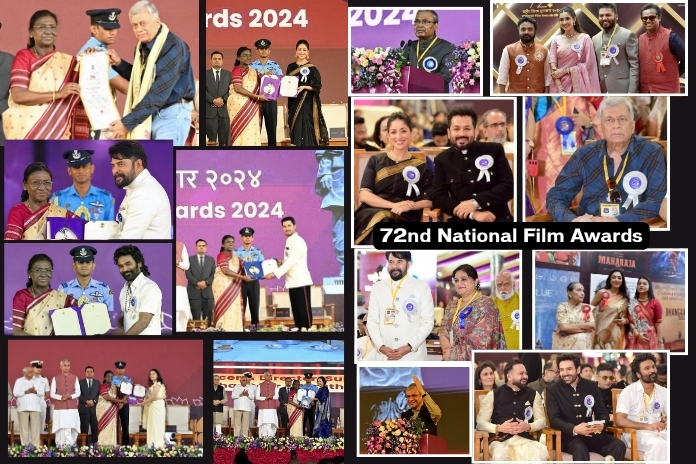
A fresh Gujarat setting celebrates Indian cinema’s diverse voices, inspiring filmmakers to turn national recognition into opportunities for global audiences
India’s National Film Awards found fresh resonance in Gujarat, where President Droupadi Murmu presented the 72nd edition at Ekta Nagar on September 22, taking the ceremony outside Delhi for the first time. Against the Statue of Unity, the change offered a compelling editorial message: national recognition belongs wherever India’s stories begin.
A national stage without boundaries
Information and Broadcasting Minister Ashwini Vaishnaw invited states and Union Territories to propose tourist destinations for future ceremonies, linking cinematic celebration with cultural heritage and tourism. For producers, that opens an imaginative possibility: an awards platform that also encourages discovery of locations, communities and stories beyond familiar production centres.
The gathering included Mammootty, Kartik Aaryan, Yami Gautam, Dhanush, Randeep Hooda, Sanjay Mishra, Anant Nag, Aditya Dhar, Rupali Ganguly, GV Prakash Kumar, Sukumar, Bhushan Kumar, Aanand L Rai, Vijay Ganguly and Manoj Muntashir. Gayatri accompanied Anant Nag, while V Vijayendra Prasad, Sreelekha Mukherji and Jayarajan Nair were present for the event.
Mammootty’s Bramayugam and Kartik’s Chandu Champion shared Best Actor honours; Yami won Best Actress for Article 370, also Best Feature Film. Supporting honours recognised Sanjay Mishra for Bhakshak, Sachana Namidass for Maharaja and Ropashree Varkady for Mithya. Randeep’s Swatantrya Veer Savarkar earned debut recognition, while Rajkumar Periasamy won direction for Amaran. Kalki 2898 AD won Best Popular Film Providing Wholesome Entertainment; Captain Miller received Best Feature Film Promoting National, Social and Environmental Values. Dhanush received recognition for both Raayan and Captain Miller.
Yami Gautam received her first National Film Award, accepting the Best Actress in a Leading Role honour from President Droupadi Murmu for her performance in Article 370. Accompanied by her husband and the film’s co-producer, Aditya Dhar, she celebrated a double distinction, with Article 370 also receiving the Best Feature Film award.
Every language opens a window
Garhwali film Dholi, Tulu film IMBU and Ravi Raj Murmu’s Santhali Angen widened the canvas, with Angen recognised for a director’s debut in non-feature filmmaking. These films can become windows through which international audiences encounter India’s many cultural worlds. For filmmakers, the lesson is encouraging: rootedness need not limit ambition.
Receiving the Dadasaheb Phalke Award, Anant Nag expressed gratitude for the people who shaped his journey, recalling an ashram childhood, around 50 plays, work with Shyam Benegal and his conscious choice of Kannada cinema and Bengaluru as his karmabhoomi. He also recalled receiving the Padma Bhushan from the President the previous year.
Murmu praised cinema’s reflection of India’s languages, traditions, aspirations and struggles, welcomed Ekta Nagar’s symbolism of unity, and expressed confidence in Indian films setting world-class standards. She asked winners to share appreciation with their teams, sought dignity and social security for workers and struggling artists, urged women’s participation in juries, and called on stars to promote disciplined lifestyles rather than harmful substances. “Stars are those that give and spread light,” she said, underscoring fame’s public responsibilities.
Gujarat Governor Acharya Devvrat welcomed the move beyond Delhi, praising cinema’s cultural contribution and urging films to encourage natural farming, health, environmental awareness, brotherhood and national unity. Chief Minister Bhupendra Patel described cinema as society’s reflection and a vehicle for culture, emotion and Indian soft power, inviting Indian and international filmmakers to Gujarat’s landscapes and heritage.
Recognition must lead to opportunity
Vaishnaw celebrated cinema’s collective effort and Anant Nag’s contribution, highlighting around 380 students across 13 industry-driven Indian Institute of Creative Technologies courses and approval for 15,000 Creative Labs. He urged filmmakers and Prasar Bharati chairman Prasoon Joshi to nurture small-town talent, stressing government-industry collaboration to reach global audiences.
I&B Secretary Chanchal Kumar reported entries spanning 400 feature films in 34 languages and 161 non-feature films in 24 languages, with 22 feature and 23 non-feature awards conferred. He linked the venue shift to Sardar Patel’s vision of unity and cinema’s growing global storytelling role.
For producers, the next task is turning recognition into circulation through strong subtitling, festival strategies, rights packaging and distribution partnerships. An award cannot guarantee an overseas sale, but it can provide a starting point for conversations with programmers, distributors and audiences. The challenge is to make discovery easier without flattening the language, texture or complexity that makes each film distinctive. The freshest promise of Gujarat is not simply a new backdrop, but renewed confidence that an Indian story, told with conviction in any language, deserves the world’s attention.
WAVES 2027: Mark October for the next creative conversation
The next edition of the World Audio Visual and Entertainment Summit, WAVES, will be held in Mumbai IN October 2027, Information and Broadcasting Minister Ashwini Vaishnaw announced at the National Film Awards ceremony in Gujarat. He invited suggestions and ideas from the creative community, offering filmmakers and producers an opportunity to help shape the conversation.
The announcement gives the industry a planning horizon, not yet a detailed event calendar. There is a useful precedent: the government reported that WAVES Bazaar in 2025 enabled more than 3,000 business meetings, operating as a marketplace for scripts, music, comics and audiovisual rights. That experience suggests how a creative summit can connect cultural ambition with commercial preparation.
Highlights

TIFF Reveals Plans for Industry Conference

Films by Shekhar Kapur and Shubham Yogi Selected for Toronto Gala

A Selection to Die for

Le Musk: A Brave New Frontier in Cinema

The Path finder: Jyoti Deshpande

Toonz to Honour Aabid Surti, Biren Ghose at Animation Masters Summit

India is the Country of Honour at Cannes

RAVINDRA VELHAL: DRIVING MEDIA TRANSFORMATION

THE PATH FINDER: JYOTI DESHPANDE

INTO THE WORLD OF RRR

Powerkids Appoints Manoj Mishra as CEO

Toonz Join Tunche Films to Co-Produce Spanish-Peruvian Animation Feature Kayara

National Museum of Indian Cinema Hosts Vintage Vehicles

I&B Secretary promises Govt’s Support to Film industry

Tom Cruise’s ‘Top Gun: Maverick’ to Blaze at Cannes

Illumination’s Minions: The Rise of Gru is the Annecy Festival Opener

Now, Shoot at Sight in India!

Lata Mangeshkar, India’s Singing Goddess

Quantum Image Making Has Arrived

Indian Films To Look Out For In 2022

2022: Centenary of Indian Cinema Legends

Singing Legend Lata Mangeshkar, Nightangale of India, Dies at 92

Bhushan Kumar’s T-Series Ventures Into OTT Content Creation Space

What’s India Looking for at European Film Market