Four Voices, One Borderless Cinema
By Pickle November 20, 2026
Share:


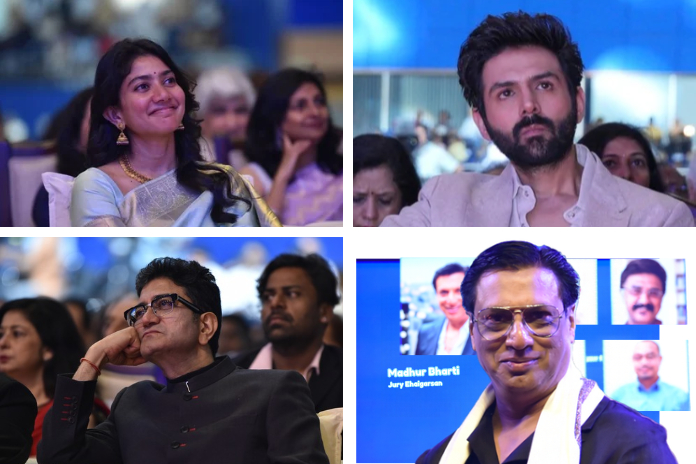
Four voices from different corners of Indian cinema, an actor from the South, a Hindi film star, a poet, and a jury chairman, delivered one verdict as the 57th International Film Festival of India opened in Goa on November 20: cinema needs neither a common language nor a big budget, only a receptive audience.
Their reflections gave a human face to the festival’s theme, Stories Without Borders, set by Festival Director Ashutosh Gowariker for an edition presenting more than 150 films from 86 countries.
Sai Pallavi, the actor who plays Sita in Nitesh Tiwari’s Ramayana, spoke as a viewer rather than a star. “I feel like a fly on the wall,” said Sai Pallavi, who trained in medicine, adding that films teach her about “human life, human minds”. Every form of art, she said, “requires the right audience”. “I just let the creator take me to his world.” Her voice matters because Ramayana opens the festival’s BRICS cinema segment, placing her at the centre of its international showcase.
Kartik Aaryan, the Hindi film actor, tied the theme to shared feeling. “When we are under one roof and we are watching a film, it’s always just one language,” said Kartik Aaryan, naming love and sadness as cinema’s vocabulary. Goa is personal too: he shot his debut, Pyaar Ka Punchnama, there. As a mainstream box-office draw, Kartik Aaryan carries the festival’s message to audiences beyond the arthouse circuit.
Prasoon Joshi, Chairman of Prasar Bharati and lyricist-writer, described Goa as an open sky for imagination, recalling that he wrote Rang De Basanti at the Taj there. To first-time foreign delegates, he said: “India is this land of storytellers.” He urged them to find stories “on the streets of Goa” and to “soak in” the place. Prasoon Joshi’s words carry institutional weight: he heads India’s public broadcaster, which launched a script-pitching lab at the festival for writers from smaller towns.
Madhur Bhandarkar, the National Film Award-winning director who chaired the 12-member Indian Panorama feature film jury, supplied the selector’s view. His jury chose 25 features from 404 submissions, a task he called “very difficult”. The lesson, said Madhur Bhandarkar, came from smaller states: “You don’t require those huge budgets, but a great concept.” The festival, he added, has “gone global”. His voice matters because the jury decides which Indian films delegates see.
Highlights

TIFF Reveals Plans for Industry Conference

Films by Shekhar Kapur and Shubham Yogi Selected for Toronto Gala

A Selection to Die for

Le Musk: A Brave New Frontier in Cinema

The Path finder: Jyoti Deshpande

Toonz to Honour Aabid Surti, Biren Ghose at Animation Masters Summit

India is the Country of Honour at Cannes

RAVINDRA VELHAL: DRIVING MEDIA TRANSFORMATION

THE PATH FINDER: JYOTI DESHPANDE

INTO THE WORLD OF RRR

Powerkids Appoints Manoj Mishra as CEO

Toonz Join Tunche Films to Co-Produce Spanish-Peruvian Animation Feature Kayara

National Museum of Indian Cinema Hosts Vintage Vehicles

I&B Secretary promises Govt’s Support to Film industry

Tom Cruise’s ‘Top Gun: Maverick’ to Blaze at Cannes

Illumination’s Minions: The Rise of Gru is the Annecy Festival Opener

Now, Shoot at Sight in India!

Lata Mangeshkar, India’s Singing Goddess

Quantum Image Making Has Arrived

Indian Films To Look Out For In 2022

2022: Centenary of Indian Cinema Legends

Singing Legend Lata Mangeshkar, Nightangale of India, Dies at 92

Bhushan Kumar’s T-Series Ventures Into OTT Content Creation Space

What’s India Looking for at European Film Market