‘India’s Next-Gen Mocap Stage is Open for Partnership’ – C V Rao, CTO, ANR Studios
By Pickle June 21, 2026
Share:


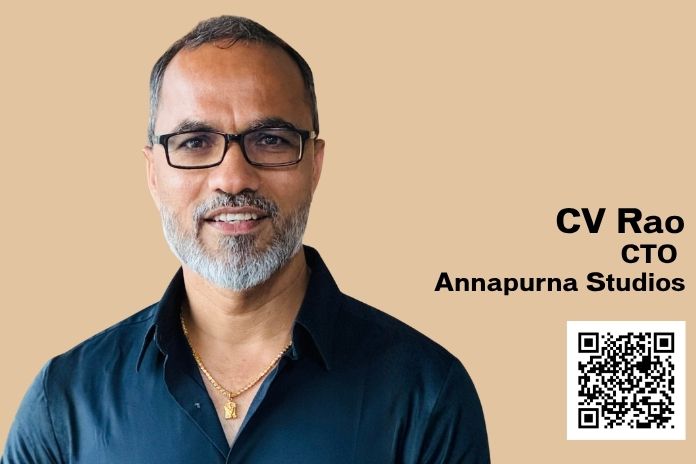
Designed for film, animation, and gaming, A&M MoCap Lab gives Indian and international producers a powerful new reason to choose Hyderabad. CV Rao, CTO, Annapurna Studios, walks us through the facility that is quietly shifting India’s place in the global production conversation. From creature capture to remote shoots, A&M MoCap Lab delivers end-to-end mocap solutions built for the ambitions of global storytellers.
ANR Studios has turned 50, and you’ve opened India’s largest motion capture stage on the Hyderabad campus. For a producer in Annecy or anywhere in Europe, BRICS, or North America, what is the A&M MoCap Lab, and why should it matter to them?
The facility is equipped with state-of-the-art Vicon cameras and an adjustable truss system, enabling the seamless capture and choreography of large-scale action sequences. It also features an impressive ceiling height of up to 35 feet, a specification that is exceptionally rare among motion capture facilities worldwide, providing greater flexibility for complex stunts, aerial movements, and high-intensity performances.
Walk us through the studio advantage. A producer who brings a project to A&M also has access to ANR’s sound stages, the LED virtual production volume with QUBE, post and sound facilities, and on-campus hospitality. How does that one-stop-shop change the economics and the timeline of a feature film/game?
Most filmmakers prefer a one-stop solution that minimizes logistical challenges and streamlines the post-production process. At Annapurna, we offer a comprehensive range of services under one roof, providing filmmakers with access to all key production and post-production verticals within the same campus. This integrated ecosystem enables them to efficiently oversee every stage of their project, collaborate seamlessly with different teams, and complete their films with greater convenience, without the need to travel between multiple facilities.
S.S. Rajamouli inaugurated the lab and shot key sequences of Varanasi here, including a much-talked-about long mocap-driven block. What did Varanasi demand from the ANR MoCap lab that no other Indian facility could offer before?
That was a wonderful opportunity for us to have him on board for the first shoot. He had a very specific vision for the workflow, covering everything from camera setups and HMCs (head-mounted cameras) to the overall capture pipeline. One of his key requirements was the ability to view the captured performance in real time within Unreal Engine, allowing him to see the actor’s performance applied directly to the digital character. This allowed for immediate creative feedback and fine-tuned performances on set, ensuring the shoot itself achieved the desired results efficiently.
Baahubali: The Eternal War is in Annecy’s Work in Progress showcase and uses A&M differently—the mocap was done here, and the animation is being built in France with Alcyde and Fortiche artists. How does that hybrid pipeline work, and what does it prove about A&M as a global collaborator?
The film features several unique sequences that showcase diverse art forms and cultural elements. Communicating these intricate performances to animators and achieving the desired level of authenticity can be a significant challenge for any director. To overcome these challenges, the director chose to capture the performances of the artists directly on our motion capture stage. The captured data was then provided to the animation team, enabling them to accurately match the original performances and preserve the nuances of the artists’ movements. This approach ensured that the creative vision was translated faithfully to the screen, and the director was extremely pleased with the results, as they closely reflected what he had originally envisioned.
Most Indian filmmakers still think motion capture means a Hollywood-sized budget. For a mid-budget Indian producer, what does a typical day or week on the A&M floor actually look like, and how much can mocap previs save them on a big action or VFX sequence?
The budget for a motion capture project is driven more by the specific requirements of the production than by the overall scale of the film itself. Naturally, large-scale films often feature ambitious, larger-than-life sequences and have the resources to support more extensive capture requirements. At the same time, our facility is well-equipped to serve mid-sized productions by offering comprehensive end-to-end solutions tailored to their budgets and creative needs.
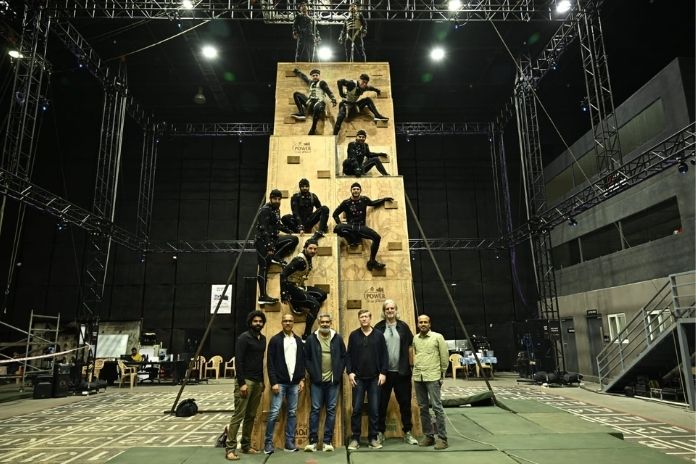
Beyond the film industry, we are also witnessing growing demand from the gaming sector, where motion capture plays an increasingly important role in character development and immersive storytelling. Each segment—whether film, gaming, or other digital content—has its budget structures and production requirements, and we work closely with clients to deliver solutions that align with their objectives and resources.
The lab also caters to animation studios and game developers, beyond just feature films. What can an animation house making a series for an OTT platform, or a gaming studio building cinematics, realistically achieve at A&M that they couldn’t in their pipeline?
Our motion capture stage is designed to support cinematic content across a wide range of mediums, including feature films, animation projects, video games, streaming content, virtual production, and immersive experiences. Any sequence that requires realistic character movement, action choreography, creature performances, stunt work, or complex digital character interactions can be effectively captured within our facility.
Indian cinema has always struggled with believable digital animals, mythological creatures, and large-scale stunt work. Tell us about the animal capture, stunt capture, and crowd capture services at A&M—what kinds of stories do these unlock for Indian producers?
One of the ongoing challenges in India is finding highly specialized performers capable of accurately portraying animals and creatures for performance capture and stunt work. In the past, productions often had to bring in experienced talent from overseas to achieve the desired level of realism and performance quality.
However, with world-class motion capture technology now available locally, accessing such specialized talent becomes much more practical. The rest of the filmmaking team can now stay in India for production, even if specific performers still require international sourcing. This significantly reduces logistical complexity and costs while enabling filmmakers to execute complex animal and creature performances more efficiently and effectively in India.
The lab is open to international filmmakers, studios, and game developers looking for a production partner in Asia. What’s your pitch to a global producer or a AAA games studio choosing between Vancouver, London, and Hyderabad?
We have a complete team of experienced performers and technicians capable of handling a wide range of motion capture and performance capture requirements. Our facility is fully equipped to support remote shoots, allowing clients to oversee productions without the need to travel to our stage in person.
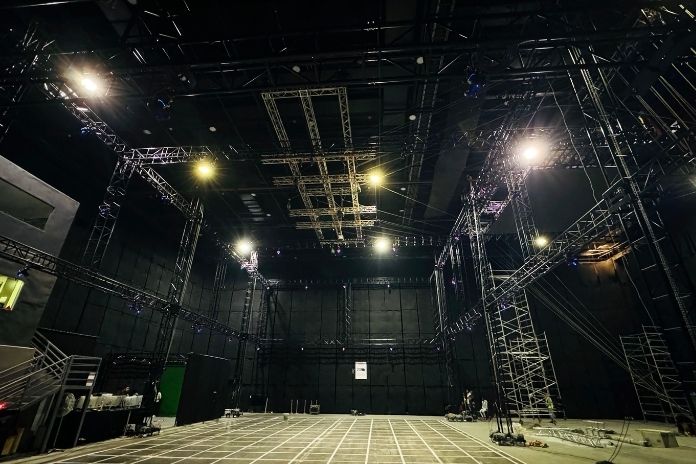
We have successfully executed multiple remote shoots for international studios, delivering high-quality results while maintaining seamless collaboration throughout the production process. The positive feedback from our overseas clients demonstrates our ability to provide an efficient, reliable, and world-class remote production experience.
Annapurna and Mihira built A&M with Animatrik, the team behind mocap on Avengers: Endgame and Spider-Man: No Way Home. What does that partnership offer an Indian producer—in terms of talent, training, and global standards—that they would otherwise have to fly out for?
Animatrik has over three decades of experience in motion capture, making them a valuable technology partner for guiding clients in India on the planning and execution of complex or innovative sequences. Their expertise also helps the facility stay aligned with evolving industry demands by ensuring access to the latest tools, technologies, and workflows required by the market.
Looking ahead two to three years, how do you see A&M shaping the way Indian films, animation, and games are made—and what would you say to a producer who’s still on the fence about whether motion capture belongs in their next project?
Following the COVID-19 pandemic, audience expectations have evolved significantly. Viewers now seek unique and immersive experiences from every film, creating new challenges for filmmakers. This shift has pushed the industry to think beyond conventional filmmaking methods and explore innovative storytelling techniques that cannot always be achieved through live-location shoots alone.
As a result, filmmakers are increasingly adopting advanced technologies to bring fresh and compelling ideas to the screen. We believe A&M is well-positioned to play a pivotal role in this transformation, helping filmmakers realize their creative vision through cutting-edge motion capture and virtual production solutions.
A FUTURE-READY MOCAP FLOOR
Why did you choose 64 Vicon Valkyrie VK26 cameras?
For precise motion capture data
How is the pipeline structured to absorb late re-blocking and lens changes from 360-degree captured data without blowing up the downstream lighting?
Using motion capture data, filmmakers can previsualize scenes and experiment with shot composition, lens selection, and camera movements well before principal photography. This allows them to refine shot divisions, evaluate creative options, and make informed decisions on how the final sequences should be executed on a live location, resulting in a more efficient and effective production process.
Are A&M’s mocap stage and ANR’s LED virtual production volume sharing tracking, timecode, and a single Unreal scene graph today, and what’s the roadmap to a unified performance-capture-to-final-pixel pipeline in your studio?
The stage will combine motion capture and LED volume together to share all required hardware for projects we are handling. Some projects are standalone, while others are combined.
Will A&M add a markerless rig—Move.ai Genesis, Wonder Dynamics, or in-house—for crowd, previs, and second-unit work, and how soon will AI-only motion data be acceptable for hero performances?
Yes, as per client requirements, we will keep on adding new hardware, software, and AI tools as and when needed. We would rather not be stuck to one, and we act as solution providers rather than just service providers.
Highlights

Watch this Video: The Good Future Explained by Futurist Gerd Leonhard

TIFF Reveals Plans for Industry Conference

Films by Shekhar Kapur and Shubham Yogi Selected for Toronto Gala

A Selection to Die for

Le Musk: A Brave New Frontier in Cinema

The Path finder: Jyoti Deshpande

Toonz to Honour Aabid Surti, Biren Ghose at Animation Masters Summit

India is the Country of Honour at Cannes

RAVINDRA VELHAL: DRIVING MEDIA TRANSFORMATION

THE PATH FINDER: JYOTI DESHPANDE

INTO THE WORLD OF RRR

Powerkids Appoints Manoj Mishra as CEO

Toonz Join Tunche Films to Co-Produce Spanish-Peruvian Animation Feature Kayara

National Museum of Indian Cinema Hosts Vintage Vehicles

I&B Secretary promises Govt’s Support to Film industry

Tom Cruise’s ‘Top Gun: Maverick’ to Blaze at Cannes

Illumination’s Minions: The Rise of Gru is the Annecy Festival Opener

Now, Shoot at Sight in India!

Lata Mangeshkar, India’s Singing Goddess

Quantum Image Making Has Arrived

Indian Films To Look Out For In 2022

2022: Centenary of Indian Cinema Legends

Singing Legend Lata Mangeshkar, Nightangale of India, Dies at 92

Bhushan Kumar’s T-Series Ventures Into OTT Content Creation Space