Why Design Matters in Collaboration, Commissioning, and Co-Production
By Pickle March 5, 2026
Share:


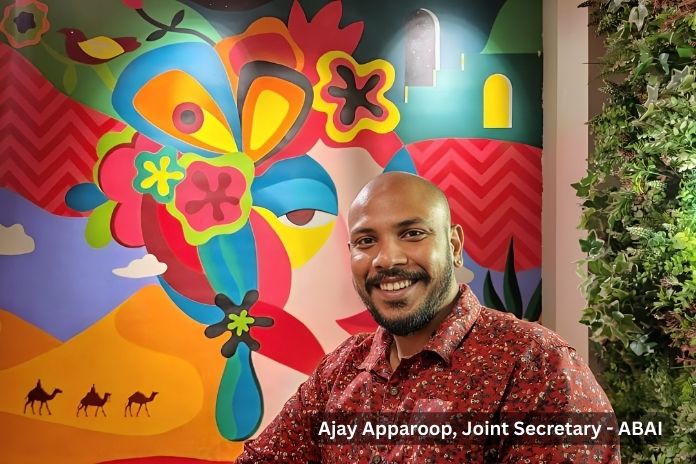
Success in India’s creative economy hinges not on chance meetings but on intentional, disciplined pitching—where ideas are crafted, proven, and presented with clarity to turn potential into lasting partnerships. By Ajay Apparoop
Networking is accidental. Matchmaking is intentional.
But in the creative industries—especially as we pivot from services to IP—pitching becomes structural.
For too long, India’s AVGC sector has excelled in execution. We built pipelines. We delivered global quality. We earned trust. But services thrive on briefs that originate elsewhere.
Ownership begins when ideas originate here.
And ideas do not travel on enthusiasm alone. They travel in preparation.
At Bengaluru GAFX, the B2B platform has evolved beyond meeting schedules and introductions. It is now about structured pitching—the disciplined honing and polishing of ideas so that local creators can present with clarity and confidence to global buyers, commissioners, and studios.
Creative matchmaking is not simply about putting people in the same room. It is about context. It is about intent. It is about readiness.
When a local IP aspirant pitches to a global buyer or commissioner, three things matter:
Narrative clarity
Market positioning
Proof of execution capability
This is where development becomes critical.
Short-format storytelling, animatics, proof-of-concept trailers, and visual bibles—these are no longer optional. They are entry tickets into serious conversations.
Global buyers are not looking for abstract passion. They are looking for investable conviction.
Through the GAFX B2B platform, we have increasingly focused on preparing participants to pitch at scale. That means refining loglines, sharpening target demographics, stress-testing commercial viability, and aligning with platform-specific content strategies.
Pitching is a craft. And like all crafts, it improves with structure.
We curate interactions so that founders and studios do not merely “meet” buyers—they present in environments designed for decision-making. Time is respected. Context is shared in advance. Expectations are aligned.
This is especially important as India transitions toward an IP-led future.
In a services environment, scale comes from manpower.
In an IP environment, scale comes from imagination that is commercially disciplined.
To pivot successfully, we must build a culture of development.
Writers must think in universes, not episodes.
Studios must prototype before they promise.
Founders must articulate monetization pathways before seeking funding.
GAFX’s B2B design increasingly supports this ecosystem shift. Structured pitching rooms, curated delegations, international buyer participation, and follow-up tracking mechanisms are all part of converting potential into partnership.
Measured deal flow matters. But so does repeat participation. When buyers return year after year, it signals that conversations are translating into outcomes.
The future of India’s creative economy will not be determined by how many meetings we host—but by how many ideas cross the threshold from concept to commission.
Pitching at scale, supported by disciplined development and intentional matchmaking, is how that threshold is crossed.
Because in the end, ecosystems are engineered—not improvised.
Highlights

NürnbergMesse’s Content India Show from October 29-31

Watan Adds Colour to Indian Independence Day

TIFF Reveals Plans for Industry Conference

Films by Shekhar Kapur and Shubham Yogi Selected for Toronto Gala

A Selection to Die for

Le Musk: A Brave New Frontier in Cinema

The Path finder: Jyoti Deshpande

Toonz to Honour Aabid Surti, Biren Ghose at Animation Masters Summit

India is the Country of Honour at Cannes

RAVINDRA VELHAL: DRIVING MEDIA TRANSFORMATION

THE PATH FINDER: JYOTI DESHPANDE

INTO THE WORLD OF RRR

Powerkids Appoints Manoj Mishra as CEO

Toonz Join Tunche Films to Co-Produce Spanish-Peruvian Animation Feature Kayara

National Museum of Indian Cinema Hosts Vintage Vehicles

I&B Secretary promises Govt’s Support to Film industry

Tom Cruise’s ‘Top Gun: Maverick’ to Blaze at Cannes

Illumination’s Minions: The Rise of Gru is the Annecy Festival Opener

Now, Shoot at Sight in India!

Lata Mangeshkar, India’s Singing Goddess

Quantum Image Making Has Arrived

Indian Films To Look Out For In 2022

2022: Centenary of Indian Cinema Legends

Singing Legend Lata Mangeshkar, Nightangale of India, Dies at 92