79TH Cannes Film Festival – 20 Films to Watch
By Pickle May 9, 2026
Share:



by Saibal Chatterjee
Films from celebrated masters as well as works by directors waiting to break out, besides much else in between, the official selection of the 79th Cannes Film Festival promises a wide-ranging cinematic treasure trove that would be worth digging into over 12 days of non-stop exploration. This list of Cannes 2026 films that are expected to be the most rewarding does not include those by Pedro Almodovar, Asghar Farhadi and Kiyoshi Kurosawa because their names alone are enough to ensure that not many festival attendees would want to give their entries a miss. The “20 films to watch” list is, therefore, focussed on three past Palme d’Or winners, several Competition first-timers, a few contenders who are returning to the fray after a hiatus, and a bunch of directors in the official selection with their debut or sophomore ventures, many of them by women, that possess the potential to catch us by surprise.
Minotaur

Russian director Andrey Zvyagintsev, 62, has won an award every single time that he has brought a film to Cannes. The Siberian-born director returns to the Croisette with his first film since 2017, the year Loveless took home the Cannes Jury Prize. Minotaur is an especially anticipated title because it comes after a bout of severe illness landed Zvyagintsev in hospital and an induced coma. The film is about a Russian business executive who discovers that his wife is having an affair while he himself is gearing up at work to lay off a number of employees.
Section: Competition
Fjord

Palme d’Or winner Cristian Mungiu (4 Months, 3 Weeks and 2 Days, 2007) is a Cannes regular who rarely goes empty-handed when the Competition awards are announced. He is vying this year with his sixth film, the first in the English-language as well as the first shot entirely outside Romania. It stars Romanian-American actor Sebastian Stan and Norwegian actress Renate Reinsve as a Romanian-Norwegian couple whose behaviour provokes intense scrutiny after they move to the wife’s remote Norwegian hometown.
Section: Competition
Sheep in the Box

Palme d’Or winner Hirokazu Kore-eda (Shoplifters, 2018) competes for the festival’s top prize for the seventh time with a science fiction film set in the near future. After their child passes away, an architect and her construction firm-owning husband welcome a humanoid robot into their home. The sci-fi film has the looks of a work that is both haunting and seductive. Some reports suggest that the film draws inspiration from the popular French children’s novel, The Little Prince.
Section: Competition
Gentle Monster

Austrian director Marie Kreutzer, who is in Cannes Competition for the first time ever, is in the fray with a drama starring Lea Seydoux and Catherine Deneuve. The cast itself makes the film a must watch. It tells the stories of two women – one, a renowned Munich pianist who moves to the countryside to support her partner after he suffers a burnout, and the other, a special investigator who has to care for her ailing father – confront dark truths about the men in their lives.
Section: Competition
The Dreamed Adventure

Valeska Grisebach, a German filmmaker whose breakout third film, Western, was selected for Un certain regard in 2017, moves a step up this year. The film, only her fourth feature in a career spanning a quarter century, is set in the border region between Bulgaria, Greece and Turkey. A woman agrees to help an old friend, a decision that leads her into problematic territory where she is confronted with her own desires.
Section: Competition
Rehearsals for a Revolution

UK-based Iranian actress-director Pegah Ahangarani’s 95-minute documentary stretches from the turmoil of early 1979 to the war that started in 2026. It sketches her life story against the backdrop of more than four decades of her country’s history.
Section: Special Screenings
Visitation

Octogenarian German director Volker Schlondorff’s first feature-length fiction in nearly a decade is centred on a house on a lakeshore near Berlin that has stood witness to a century of tumultuous history. Generations come and go as regimes change and humanity adapts to a world in constant flux. Schlondorff’s The Tin Drum won the Palme d’Or in 1979.
Section: Cannes Premiere
Congo Boy

Central African director and slam artist Rafiki Fariala’s drama revolves around a teenage Congolese refugee boy in Bangui who aspires to be a musician even as a civil war rages and both his parents are imprisoned. He juggles his dreams and aspirations with the responsibilities thrust upon him as the eldest of five siblings. The selection represents a Cannes breakthrough for Central African Republic.
Section: Un certain regard
Ben’Imana

The debut of Kigali-born filmmaker Marie-Clementine Dusabejambo is set in 2012. It follows a survivor of the 1994 anti-Tutsi genocide who works to further justice and reconciliation with help of the community. As pressures mount on her at work, a family crisis forces her to confront her beliefs. Ben’Imana is the first-ever film by a Rwandan filmmaker to break into the Cannes official selection.
Section: Un certain regard
Elephants in the Fog

Nepali writer-director Abinash Bikram Shah’s debut film, about the matriarch of a Kinnar community who is torn between wanting to flee with the man she loves and staying on to search for a missing woman, is the first feature from the Himalayan nation in the Cannes Film Festival’s official selection. His short film, Lori, won a Special Jury Mention in the Cannes short film competition in 2022. That apart, he co-wrote Sambhala, the first-ever Nepali film to compete for the Golden Bear in Berlin.
Section: Un certain regard
La Mas Dulce (Strawberries)
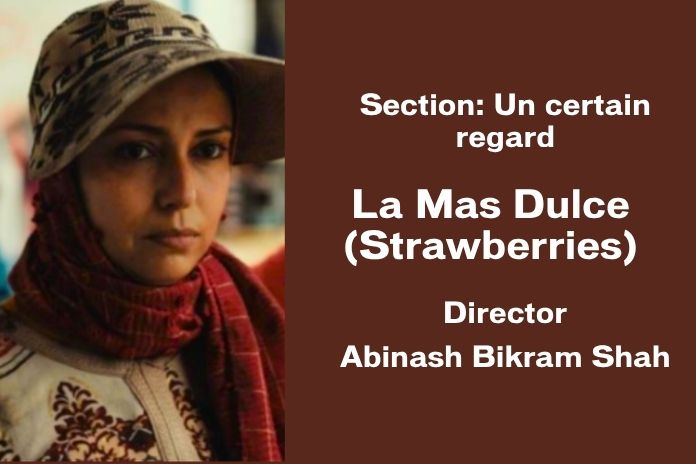
Franco-Moroccan filmmaker Laila Marrakchi, known for Rock the Kasbah (2013), is in Cannes with her third feature in two decades. Set in Spain, it zeroes in on Moroccan women who travel to Andalusia for the strawberry-picking season and encounter exploitation and hardships. Strawberries is Marrakchi’s first film that isn’t set in her native Casablanca.
Section: Un certain regard
Yesterday the Eye Didn’t Sleep
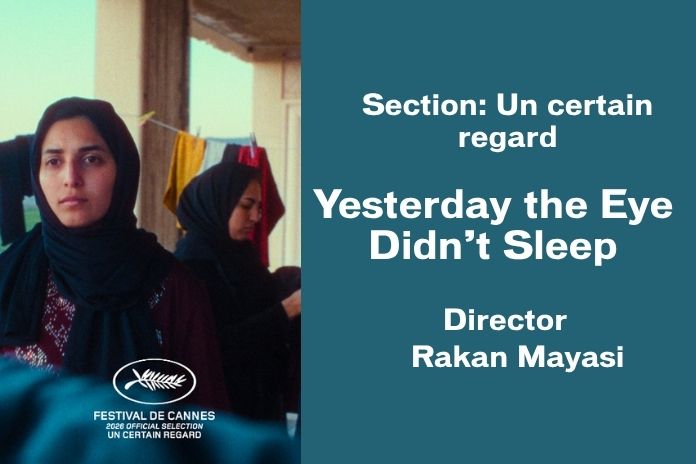
Rakan Mayasi, Palestinian filmmaker born in Germany and based between Brussels and Beirut, situates his first film between myth and reality in a zone where absences often define existence. Shot entirely in the Bekaa Valley with non-professional actors, it plays out in a region “shrouded in fog and tribal codes”. A young woman burns the vehicle of the man she loves when the latter decides to marry someone else. Will the fire that is unleashed be contained?
Section: Un certain regard
L’Inconnue (The Unknown)

French director Arthur Harari, who co-wrote Justine Triet’s Palme d’Or-winning Anatomy of a Fall, is competing for the first time for the festival’s top prize with his third directorial venture. It is described as a psychological fantasy. Starring Lea Seydoux and Niels Schneider, the film is loosely based on a graphic novel that Harari wrote with his brother Lucas, who is one of the screenwriters. It follows a man who wakes up in the body of a woman he has a one-night stand with after a wild party.
Section: Competition
All of a Sudden
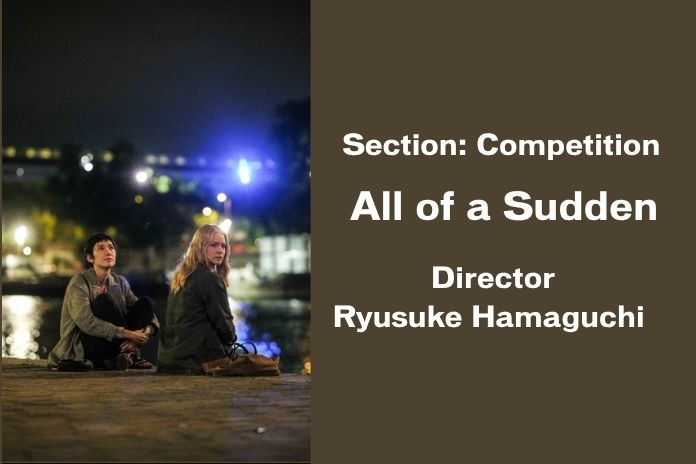
Oscar winner Ryusuke Hamaguchi (Drive My Car, 2021) makes his French-language debut with this film starring Virginie Efira and Paris-based Japanese actress and model Tao Okamoto. In a suburban nursing home in Paris, the facility’s director tries to introduce a new humane care technique called Humanitude despite scepticism. Her life changes when she meets a terminally ill Japanese playwright.
Section: Competition
Fatherland

UK-based Polish director Pawel Pawlikowski, who won the best director award at Cannes in 2018, returns to the Competition with a film that features Hans Zischler as Nobel laureate Thomas Mann and Sandra Huller as his daughter Erika. The two embark on a road trip from Frankfurt, West Germany, to Weimar, East Germany, during the Cold War. Like Pawlikowski’s Ida and Cold War (which in 2018 was the first Polish film in 37 years in Competition at Cannes), Fatherland is shot in black and white by cinematographer Lukasz Zal.
Section: Competition
The Meltdown
Manuela Martelli, whose debut film, 1976, bowed in Directors’ Fortnight in 2o22, is now in the Cannes Film Festival’s official selection with a Un certain regard title, The Meltdown. Set in post-dictatorship Chile, the film centres on a nine-year-old girl who lives with her grandparents, owners of a hotel near a ski resort. She befriends a 15-year-old German skier, who then vanishes without a trace, leaving behind a plethora of questions and mysteries.
Section: Un certain regard
I’ll Be Gone in June
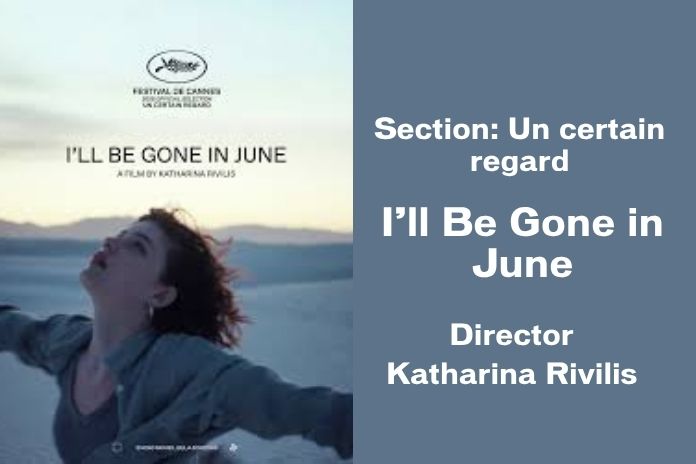
Inspired by her own experience as an exchange student in New Mexico, German actress and director Katharina Rivilis, in her debut film, presents the struggles of a girl who moves to a desert town in the US in 2001 and develops a close friendship with a boy whose struggles are no different from hers. The film is co-produced by Wim Wenders.
Section: Un certain regard
All the Lovers in the Night
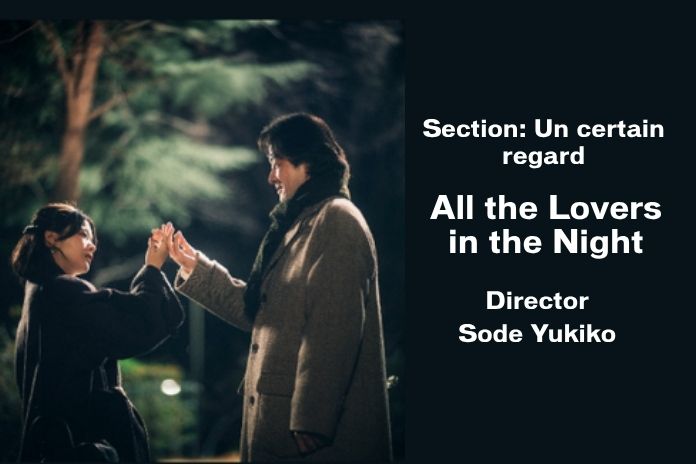
The first big-screen adaptation of a 2011 novel of the same name by Mieko Kawakami, the film is Japanese director Sode Yukiko’s first film in five years. In a bumper year for Japan in official selection at Cannes, this is one film that could turn out to be a real find of the festival. It tells the story of a freelance proofreader whose life begins to change when she meets a reticent high school physics teacher.
Section: Un certain regard
Her Private Hell

Danish filmmaker Nicolas Winding Refn’s first film since The Neon Demon, which competed for the Palme d’Or in 2016, Her Private Hell marks the director’s return to the big screen after a detour in the form of limited two limited series – Too Old to Die Young for Amazon Prime Video and Copenhagen Cowboy for Netflix. The film centres on characters in quest of their dear ones in a futuristic city where a dense mist unleashes a deadly presence. Interest in the film is understandably very high.
Section: Out of Competition
Sanguine

The synopsis of debutante Marion le Coroller’s film reads: “Margot struggles to blend in as she begins her internship in a hospital emergency room. She is confronted by patients her own age with inexplicable symptoms. The repeat appearance of these baffling cases raises questions. She starts noticing increasingly troubling signs on her own body.” Sanguine screens at midnight and we know what to expect – a genre film that pulls out the stops.
Section: Midnight Screenings
Highlights

Gaming Industry Braves Covid

TIFF Reveals Plans for Industry Conference

Films by Shekhar Kapur and Shubham Yogi Selected for Toronto Gala

A Selection to Die for

Le Musk: A Brave New Frontier in Cinema

The Path finder: Jyoti Deshpande

Toonz to Honour Aabid Surti, Biren Ghose at Animation Masters Summit

India is the Country of Honour at Cannes

RAVINDRA VELHAL: DRIVING MEDIA TRANSFORMATION

THE PATH FINDER: JYOTI DESHPANDE

INTO THE WORLD OF RRR

Powerkids Appoints Manoj Mishra as CEO

Toonz Join Tunche Films to Co-Produce Spanish-Peruvian Animation Feature Kayara

National Museum of Indian Cinema Hosts Vintage Vehicles

I&B Secretary promises Govt’s Support to Film industry

Tom Cruise’s ‘Top Gun: Maverick’ to Blaze at Cannes

Illumination’s Minions: The Rise of Gru is the Annecy Festival Opener

Now, Shoot at Sight in India!

Lata Mangeshkar, India’s Singing Goddess

Quantum Image Making Has Arrived

Indian Films To Look Out For In 2022

2022: Centenary of Indian Cinema Legends

Singing Legend Lata Mangeshkar, Nightangale of India, Dies at 92

Bhushan Kumar’s T-Series Ventures Into OTT Content Creation Space