Saving Cinema’s Past, Engineering Its AI Future
By Pickle May 10, 2026
Share:


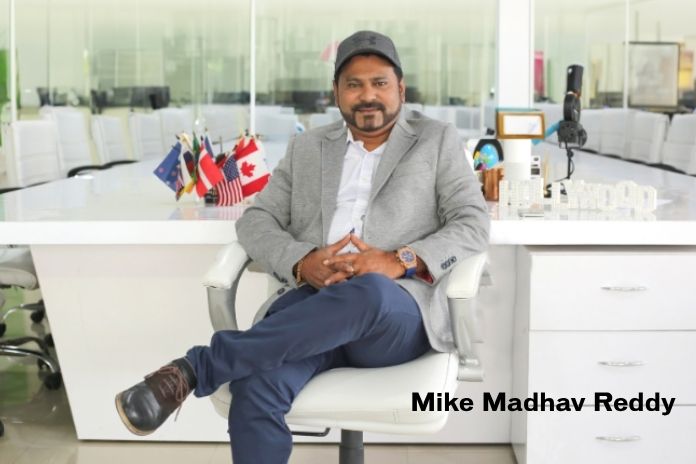
At Cannes 2026, Mike Madhav Reddy’s Digital Restore helps resurrect a lost Indian classic while his AI tools rewrite the rules of global VFX production at Rotomaker AI.
When the 79th Cannes Film Festival raises its curtain on May 12, one of its most quietly powerful moments will belong to an Indian entrepreneur who never sought the spotlight. Amma Ariyan — John Abraham’s radical 1986 Malayalam masterpiece, long feared lost to time — will receive its world premiere as a pristine 4K restoration, the only Indian feature selected for a world premiere at Cannes this year.
Behind that achievement is Digital Film Restore Pvt Ltd, a Chennai-based studio co-founded by Mike Madhav Reddy, the man the global VFX industry simply knows as MIKE. That a company rooted in cutting-edge AI-driven post-production also helped rescue a film made by a collective that travelled village to village beating drums to raise funds speaks volumes about the breadth of Mike’s vision—honoring cinema’s past while engineering its future.
The restoration of Amma Ariyan was a formidable technical undertaking. The project began in 2023 when Film Heritage Foundation (FHF) found that the only widely available version of the film was a poor-quality online copy. A painstaking global search through the International Federation of Film Archives eventually led to just two surviving 35mm release prints at the National Film Archive of India—one subtitled, one unsubtitled—both showing severe deterioration: scratches, broken splices, and widespread emulsion damage. Since there was no original camera negative, the restoration done together at L’Immagine Ritrovata in Bologna and Digital Film Restore Pvt. Ltd. in Chennai required more than 4,000 manual sound fixes to deal with noise, dropouts, and inconsistencies, all closely overseen by cinematographer Venu ISC and editor Bina Paul to maintain the film’s original look.
For Mike, this project sits at the intersection of craft and mission. Digital Film Restore represents his conviction that the same technical expertise that powers Hollywood VFX pipelines can — and should — be applied to preserving cinema’s endangered heritage. The company’s selection as a restoration partner by the Film Heritage Foundation, which has taken five consecutive Indian restorations to Cannes between 2022 and 2026, is a mark of institutional trust built on technical credibility.
Yet the Cannes moment is only one chapter in a story that spans 30 years and two continents. Mike began as a cinematographer’s assistant in India before a single frame of Amoru, a Telugu film ablaze with early VFX work, redirected his entire career. He trained at C-DAC in Pune, joined Crest Communications in Mumbai under director Shyam Ramanna, and in 2000 crossed the world to Vancouver to work at Rainmaker, one of North America’s leading VFX and animation studios. Stints at Sony Pictures, Technicolor Hollywood, Deluxe, and Company 3 in Los Angeles followed, giving him a front-row education in DI, color grading, and compositing at the highest levels of the industry.
He witnessed a persistent frustration everywhere in the West, which inspired the creation of Rotomaker. Rotoscoping—the labor-intensive, frame-by-frame isolation of subjects—was the task no Western VFX graduate wanted to do, yet every production needed it. Mike began channeling that work to India, building volumes through Pixion in Chennai and Mumbai until it employed over 250 people on his contracts alone. When Pixion faced closure, he acquired the Chennai operation outright, trained a fresh team of 30 artists, and founded Rotomaker—a US-incorporated, India-powered VFX services company specializing in five core services: rotoscoping, paint, matte work, matchmove, and compositing.
Eighteen years and 4,500 Hollywood productions later, Rotomaker serves more than 1,000 clients across 65 countries and is, by Mike’s own estimate, the second-largest roto-paint company in India and the sixth-largest in its services category globally.
Its Hyderabad headquarters, with offices in Chennai and Patna and a commercial presence in Los Angeles, has trained generations of artists—so many that Mike estimates the Rotomaker ecosystem has created over 10,000 jobs in roto and paint across India.
Then came the storms that forced reinvention. COVID-19 froze global content pipelines. The Hollywood writers’ and actors’ strikes that followed saw major studios cut productions by 50–70 percent, Technicolor shutter, and senior artists walk away from the industry permanently. Rather than contract, Mike invested.
Over two years, Rotomaker developed proprietary machine learning tools—trained entirely on in-house domain data—that now automate 60–70 percent of the workload on roto and paint shots, compressing production timelines by 50–60 percent. Artists handle the final refinement and quality control, bringing the craft judgment that machines cannot replicate. The result is a pipeline that delivers Hollywood-grade output at highly competitive prices, making Rotomaker an increasingly attractive partner for studios managing tighter post-production budgets.
Rotomaker AI has expanded well beyond traditional VFX services. The company has created a system that turns text into images by choosing from top AI generators based on a creative brief, a tool that helps filmmakers plan their scenes before filming, and—developed with an Indian tech company—a platform for making full 3D animated movies using AI-generated characters and performances. Mike also sees AI rewriting the economics of content ownership: a film that might once have cost $1 million to produce can now, he estimates, be made at around 30 percent of that budget with intelligent AI integration, opening the door for Indian creators to build original IP aimed squarely at global audiences.
As the Palais des Festivals prepares to screen a film rescued from near-oblivion, Mike Madhav Reddy arrives at Cannes carrying both the weight of that rescued heritage and the momentum of a company transforming itself for a new era. The man who first fell in love with cinema through a single frame of VFX on a Telugu screen has spent three decades making the impossible look real — whether that means restoring 4,000 frames of damaged celluloid from a 1986 masterpiece or generating photorealistic AI content for a global streaming platform. His philosophy remains unchanged: the job is complete if the audience cannot discern the method of creation.
Following is the list of few prestigious Film Titles restored by Digital Film Restore Pvt. Ltd.,India, Pixel Film Restore India Ltd, a division of Rotomaker LLC Hollywood. We work on International titles and Domestic titles.
| S No | Title | S No | Title |
| 1 | A Bite of love | 40 | King of Comedy |
| 2 | Black widow | 41 | Corridor of Mirrors |
| 3 | The Fly | 42 | Dark Journey |
| 4 | Thunder in the Valley | 43 | Point Blank |
| 5 | Lethal Weapon 4 | 44 | Olympics 1964 Tokyo – 2K |
| 6 | King Kong | 45 | Olympics 1972 Sapporo – 2K |
| 7 | The Treasure of the sierra madre | 46 | High Anxiety |
| 8 | Three Kings | 47 | A View to a Kill |
| 9 | Taken to Task | 48 | Rain Man |
| 10 | Dial M For Murder | 49 | Thin Red Line |
| 11 | Color Purple | 50 | Golden Eye |
| 12 | Superman I | 51 | The Burglars |
| 13 | Superman II | 52 | The Majestic |
| 14 | Outlaw Josey | 53 | Roman Holiday |
| 15 | King of Kings | 54 | Calamity Jane |
| 16 | Citizen Kane | 55 | Brave Heart |
| 17 | The Great Ecape | 56 | Emperor of the North |
| 18 | Whatever happened to Baby Jane | 57 | Bad Boys I |
| 19 | The Bodyguard | 58 | Bad Boys II |
| 20 | Queen of the Damned | 59 | Heaven can Wait |
| 21 | Casablanca | 60 | City of Hope |
| 22 | Cabaret | 61 | The Court Jester |
| 23 | Romeo must die | 62 | Star Trek II |
| 24 | Singing in the rain | 63 | Green Card |
| 25 | Olympics 1928 | 64 | Battleground |
| 26 | Dial M For Murder – Left & Right | 65 | The Color of Money |
| 27 | Iron Giant | 66 | Million Years BC |
| 28 | A Star is born | 67 | Modesty Blaise |
| 29 | Grand Hotel | 68 | True Lies |
| 30 | Batman Begins | 69 | Dark Knight |
| 31 | Empire of Sun | 70 | Popeye Ace of Space |
| 32 | Great Gatsby | 71 | Romana |
| 33 | Action Jackson | 72 | Orphan |
| 34 | Die Hard2 | 73 | Night and Day |
| 35 | Die Hard: With a Vengeance | 74 | Sholay |
| 36 | Olympics 1976 – Innsbruck | 75 | Tom And Jerry Cartoons (Golden ERA) |
| 37 | Olympics 1984 – LA | 76 | Three Amigos |
| 38 | Blast from the Past | 77 | Maverick |
| 39 | House of Wax | 78 | The Wild Angel |

Behind the Scenes: The Art and Science of Digital Film Restoration
Digital Film Restore’s offerings are as varied as the challenges they solve:
Scanning: Physical film is carefully digitized, with every precaution taken to ensure the safety and integrity of valuable materials.
Restoration: Each frame is reviewed and restored, combining advanced automation with hands-on manual intervention to correct warping, mold, dust, dirt, and scratches.
Grading: Their color grading system allows for infinite corrections, guaranteeing fidelity to the original artistic intent.
Mastering: The final product is delivered in any format required, with geometry and color workflows aligned to global benchmarks.
Dust-Busting, De-Flickering, and Stabilization: From removing fingerprints and stains to correcting shaky frames and lighting inconsistencies, every detail is addressed.
Line Scratch Removal: Advanced spatial filtering techniques erase scratches, no matter how complex or varied they may be.
Full Film Restoration: For projects needing the works, they offer comprehensive packages that address every conceivable defect, ensuring a pristine, future-proof result.
Secure Data Transfer: For international clients, secure and rapid data transfer is critical. Digital Film Restore uses Aspera faspex servers, which outperform traditional FTP or HTTP in both speed and security. Aspera’s encryption and integrity verification protocols ensure that sensitive film material remains confidential and intact during transit, a crucial consideration for irreplaceable cultural artifacts.
Timelines and Transparency: Restoration at Digital Film Restore is as efficient as it is meticulous. Most projects are delivered within three weeks, thanks to time-tested workflows and scalable resources. Budgets and timelines are customized based on the source material’s complexity and desired resolution, with initial samples reviewed before a final quote is provided—ensuring clients always receive value and transparency.
Highlights

TIFF Reveals Plans for Industry Conference

Films by Shekhar Kapur and Shubham Yogi Selected for Toronto Gala

A Selection to Die for

Le Musk: A Brave New Frontier in Cinema

The Path finder: Jyoti Deshpande

Toonz to Honour Aabid Surti, Biren Ghose at Animation Masters Summit

India is the Country of Honour at Cannes

RAVINDRA VELHAL: DRIVING MEDIA TRANSFORMATION

THE PATH FINDER: JYOTI DESHPANDE

INTO THE WORLD OF RRR

Powerkids Appoints Manoj Mishra as CEO

Toonz Join Tunche Films to Co-Produce Spanish-Peruvian Animation Feature Kayara

National Museum of Indian Cinema Hosts Vintage Vehicles

I&B Secretary promises Govt’s Support to Film industry

Tom Cruise’s ‘Top Gun: Maverick’ to Blaze at Cannes

Illumination’s Minions: The Rise of Gru is the Annecy Festival Opener

Now, Shoot at Sight in India!

Lata Mangeshkar, India’s Singing Goddess

Quantum Image Making Has Arrived

Indian Films To Look Out For In 2022

2022: Centenary of Indian Cinema Legends

Singing Legend Lata Mangeshkar, Nightangale of India, Dies at 92

Bhushan Kumar’s T-Series Ventures Into OTT Content Creation Space

What’s India Looking for at European Film Market