Delhi’s Cinematic Revolution
By Pickle November 18, 2026
Share:


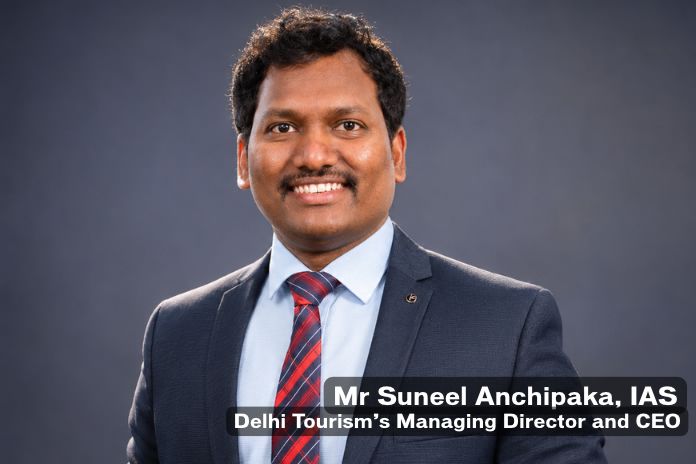
Incentive of “USD 320K approx, 12 Days, One Window: Inside Delhi’s Big Pitch to Filmmakers” –A Conversation with the Delhi Tourism’s Managing Director and CEO, Shri Suneel Anchipaka.
- Delhi is often captured in snapshots—the historic grandeur of Old Delhi or the power corridors of Lutyens. How are you moving beyond these tropes to ensure the city is treated as a “living character” in modern cinema?
Delhi offers a cinematic density that few cities globally can match. It’s a rare blend of heritage, political gravity, and gritty everyday realism, all contained within a very compact geography. Our policy doesn’t just offer locations; it provides a structured ecosystem. By offering incentives and institutional support, we are inviting filmmakers to explore the city’s modernity and its “unseen” corners with the same ease they would a historical monument. As we like to say, few places offer this range of visual palettes within such a tight radius.
- A ₹3 crore (USD 320K approx) subsidy is a significant statement of intent. How does this financial backing change the math for a production house choosing Delhi over another global city?
A ₹3 crore incentive is a powerful signal that Delhi is serious about becoming a global cinema hub. It de-risks the production process. However, these are performance-linked incentives. They are tied to how many days you shoot here, your local spend, and the on-screen visibility you give the city. It’s a partnership: we support the filmmaker, and in return, the film creates a real economic and cultural impact for Delhi.
“In filmmaking, time is money. Cutting approval timelines is as powerful as any subsidy.”
- Efficiency is the new currency in production. You’ve made a bold promise of 12-day clearances. How are you ensuring this isn’t just a “paper promise”?
We’ve institutionalized the timeline. By coordinating multiple agencies behind a single digital interface, we’ve targeted a 12 days approval window, which is a massive leap from the months it used to take. We understand that for a director, a day lost to paperwork is a day of budget wasted.
- Is this ecosystem open to the global stage? Can an international documentary crew or a Hollywood production tap into these same benefits?
Absolutely. The incentives are available for international productions as well, provided they meet the criteria laid out in our Film Policy. We want Delhi to be a destination for global OTT platforms, international documentaries, and feature films alike.
- How do you ensure that this “Cinematic Revolution” actually benefits the people of Delhi, beyond just seeing their streets on screen?
That is built into the DNA of the policy. The incentives are directly tied to local hiring and expenditure. We want production houses to employ our local creative talent, use our technical crews, and spend in our local markets. This ensures that the wealth generated by the film industry flows directly back into Delhi’s creative economy. An initiative called ‘Partners in Growth’ features in the Policy to enable the formation of partnerships that will help the industry grow and achieve new laurels. The main moto of this initiative is Get Connected and Get Engaged. These initiative shall foster increased engagement between the Delhi film fraternity and the end consumers of the cinematic products that are offered by Delhi.
- The International Film Festival Delhi (IFFD) has made a high-profile debut at Bharat Mandapam. How does this festival define your vision for the future, and what do the early numbers tell us about its success?
The IFFD is a flagship initiative envisioned under the Delhi Film Policy to position our city as a vibrant global hub for cinema and storytelling. As Honourable Chief Minister Rekha Gupta has emphasized, this is a “historic opportunity” to place Delhi firmly on the global cultural map. Under her leadership, the festival has been designed as a future-facing ecosystem that embraces evolving technologies and new cinematic forms. The success of this vision is already evident in the numbers: We received a remarkable 1,151 film submissions and screened over 125 curated Indian and international films. This “successful beginning” confirms the Chief Minister’s goal of transforming Delhi into a landmark destination for cinematic achievement and a true “cinematic wonderland
- What are the next big milestones for Delhi in terms of film policy and industry engagement?
We are focusing on strengthening Delhi as a complete production base, not just a shooting destination—by improving access to locations, expanding support infrastructure, and building stronger post-production linkages.
On industry engagement, the next step is to expand platforms beyond the International Film Festival Delhi into year-round co-production, pitching, and global collaboration opportunities, bringing OTT platforms and studios into closer partnership with the city.
Finally, a major priority is deeper integration of local talent and crews into film projects, ensuring that Delhi’s creative ecosystem benefits directly from the growth in production activity.
- Delhi’s ambitions are clearly expanding beyond national borders. With the city’s sights set on major international stages like the Cannes Film Festival, what is the core mission of this global outreach?
Our mission is to move beyond being a mere shooting location and establish Delhi as a “vibrant global hub” for cinema and storytelling. By engaging with the international community, we are working to forge “international tie-ups” and “global collaboration opportunities”. As the Honourable Chief Minister has emphasized, this is a historic opportunity to place Delhi “firmly on the global cultural map”. By showcasing our world-class incentives—such as the ₹3 crore subsidy and a timeboundsingle-window clearance—to global studios and OTT platforms, we aim to prove that Delhi is not just film-friendly, but “film-essential”.
- Looking ahead five years, what is the ultimate headline you want to see regarding Delhi’s film industry?
We are coming up with a new Film Policy which will be more inclusive and forward looking. In that we will also focus on AVGC, AI and the other innovations now reshaping the industry. I want to see Delhi recognized as India’s fastest-growing urban film hub. The goal is to build a thriving and sustainable media and entertainment economy.
SNAPSHOT: The Delhi Film Policy 2022
Revolutionising the Production Pipeline
- Single-Window Efficiency: A unified digital portal, ‘e – Film Clearance,’ integrates over 25 stakeholder agencies to eliminate bureaucratic hurdles.
- The 12-Day Guarantee: Institutionalised coordination ensures that all shooting approvals are processed within 12 calendar days, with provisions for “deemed approval” if timelines are exceeded.
- Financial Powerhouse: The Delhi Film Fund offers performance-linked subsidies to filmmakers.
- Major Subsidies: Eligible projects can claim a subsidy capped at ₹3 Crore, (USD 320K approx.) based on a transparent point system that rewards local hiring and on-screen visibility of Delhi.
- Minimum Requirements: To qualify for incentives, productions must shoot in the capital for at least five days.
Highlights

20 Work in Progress Tiltles Unveiled for Goes to Cannes

Krishna Janmashtami Special

Don’t Ban Online Games. Bring Progressive Law: FICCI

TIFF Reveals Plans for Industry Conference

Films by Shekhar Kapur and Shubham Yogi Selected for Toronto Gala

A Selection to Die for

Le Musk: A Brave New Frontier in Cinema

The Path finder: Jyoti Deshpande

Toonz to Honour Aabid Surti, Biren Ghose at Animation Masters Summit

India is the Country of Honour at Cannes

RAVINDRA VELHAL: DRIVING MEDIA TRANSFORMATION

THE PATH FINDER: JYOTI DESHPANDE

INTO THE WORLD OF RRR

Powerkids Appoints Manoj Mishra as CEO

Toonz Join Tunche Films to Co-Produce Spanish-Peruvian Animation Feature Kayara

National Museum of Indian Cinema Hosts Vintage Vehicles

I&B Secretary promises Govt’s Support to Film industry

Tom Cruise’s ‘Top Gun: Maverick’ to Blaze at Cannes

Illumination’s Minions: The Rise of Gru is the Annecy Festival Opener

Now, Shoot at Sight in India!

Lata Mangeshkar, India’s Singing Goddess

Quantum Image Making Has Arrived

Indian Films To Look Out For In 2022

2022: Centenary of Indian Cinema Legends