Rewiring the Concert Economy
By Pickle November 18, 2026
Share:


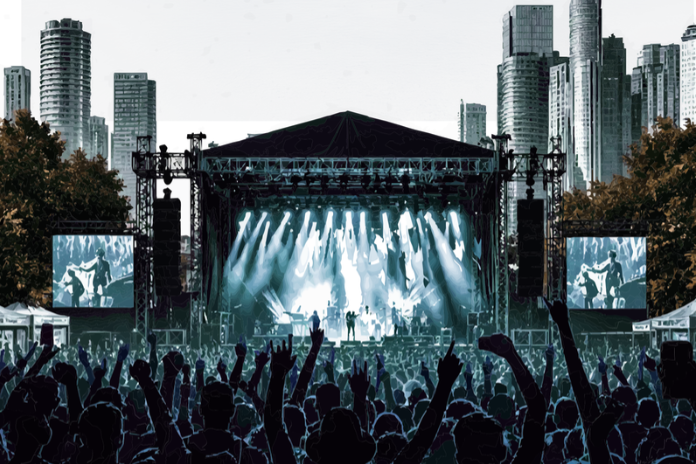
Live Events Development Cell (LEDC), by the Ministry of Information and Broadcasting shaping up as a single window ecosystem for live events permission
When tens of thousands of fans gather for a concert in Mumbai or Guwahati, they see a world-class production. The event organiser, however, sees a paper trail of up to 56 approvals, licences, and inspections. Untangling that administrative knot is the primary mission of the Live Events Development Cell (LEDC). LEDC is a single-window facilitation mechanism, aiming to place India among the world’s leading live entertainment destinations by 2030 and unlock 15 to 20 million direct and ancillary jobs while elevating India onto the global touring stage.
Why the Cell exists
The Live Events Development Cell (LEDC) grew out of the Prime Minister’s emphasis on the “concert economy” at the WAVES Summit in May 2025. That emphasis reflected a vision of India as a global creative and cultural powerhouse, where the creative economy drives not only jobs and tourism but also national pride. Taking this vision forward, the Hon’ble Minister of Information & Broadcasting established the LEDC in July 2026. Chaired by the Secretary, I&B, the Cell brings together central ministries, state governments, industry bodies and music rights societies. Its stated aims are ambitious: to double the size of the sector by 2030, generate 15-20 million direct and ancillary jobs, and position India among the world’s leading live entertainment destinations.
The numbers explain the urgency. MIB cites industry estimates valuing the organised segment at ₹145 billion in 2025, projected to reach ₹196 billion by 2028. At the fifth LEDC meeting on 7 October 2026, Secretary Chanchal Kumar said the sector had grown 44 per cent in a year, with around 34,000 events held and more than one crore livelihoods supported.
The Ministry’s framework
MIB has moved on several fronts at once.
A joint working group first. In August 2025 the Ministry convened a Joint Working Group with state governments and industry, which fed into the Cell’s structure. By the fifth meeting in October 2026, the LEDC counted 14 central ministries and departments, 10 states and Union Territories, and 21 industry bodies, up from 9 ministries, 6 states and 12 industry members at the fourth meeting in April.
LEDC aims to generate 15–20 million direct and ancillary jobs, and position India among the world’s leading live entertainment destinations.
One digital window. The flagship reform is a single-window permission system on the India Cine Hub (ICH) portal. This aims to offers one workflow for applications, approvals, payments and inspections, with real-time tracking, audit trails and time-bound processing with escalation for delays. States and UTs have now been asked to route the complete licence lifecycle through it. The number with designated nodal officers rose from 16 to 29.
A model rulebook. On March 2026, MIB circulated the Model Executive Order for Streamlining Licensing and Permissions for Live Events in India, 2026, urging states to adopt it. Adoption has been slower than expected with adaptation by 5 states currently.
The next wave of reform. The fifth meeting discussed a single national music licence with notified tariffs to replace overlapping demands from multiple rights societies, notified entertainment precincts under the Noise Pollution (Regulation and Control) Rules, 2000, and relaxed caps on foreign remittances for international artists. A Green Concert Protocol and inclusivity guidelines for the safety of women and persons with disabilities are proposed for launch at WAVES 2027.
Broadening Inter-Ministerial Collaboration
What distinguishes the Cell from a mere talking shop is its operational reach beyond MIB
- Ministry of Home Affairs: streamlined FRRO re-registration for short-term stays by foreign performers.
- Archaeological Survey of India: issued an SOP for live events at protected monuments and identified 224 heritage sites where events may be held under guidelines.
- Sports Authority of India: issued its own SOP for events at its venues, as the Cell works to get major venues pre-approved so organisers need not repeat venue-level permissions.
- Reserve Bank of India: following an LEDC recommendation, removed the bank-guarantee requirement for advance remittances of $500,000 and above for imported services, effective 1 October 2026.
- Skill Development, Tourism, Finance and others: asked to take up National Skills Qualifications Framework (NSQF) integration, event-based tourism, GST rationalisation, MSME recognition, and group visas with customs relief for artists’ equipment.
On infrastructure, the LEDC is circulating a Brownfield and Greenfield Venue Development framework. Proposals include state-led purpose-built venues, inclusion of large venues in the Harmonised Master List of Infrastructure Sub-sectors, and Viability Gap Funding support. On skills, the Indian Institute of Mass Communication, working with the Media and Entertainment Skills Council and the Event and Entertainment Management Association (EEMA), is building certificate and short-term courses in live events.
Built With Industry, Not Just for It
The Industry has been a close collaborator of this cell from the very beginning. Participants have included Event and Entertainment Management Association(EEMA), Federation of Indian Chambers of Commerce and Industry (FICCI), The Confederation of Indian Industry (CII), The Associated Chambers of Commerce & Industry of India ( ASSOCHAM) and the International Live Events Association, alongside BookMyShow, District by Zomato, Wizcraft, EVA Live, Saregama and Touchwood Entertainment, with rights bodies such as Indian Performing Right Society (IPRS), Phonographic Performance Limited (PPL), Recorded Music Performance Limited (RMPL) and Indian Music Industry Trust (IMI) Trust. Industry has also pressed for tax relief, with EEMA tasked to represent the case for cutting GST on live events from 18 per cent to 5 per cent.
At FICCI FRAMES 2026, speakers said demand has outrun supply, and industry voices called for clearer rules on alcohol at events. Separate reporting notes India has fewer than ten purpose-built venues able to host over 10,000 people.
From Model Order to Ground Reality: The States’ Role
Because licensing, policing and land are largely state subjects, the Cell’s success depends on state buy-in.
Assam moved first with a Concert Tourism Policy in 2025. It offers Viability Gap Funding of up to ₹5 crore per event, access to government grounds, and single-window clearance through the Assam Tourism Development Corporation. The Post Malone concert in Guwahati became its pilot, and a BookMyShow–EY-Parthenon blueprint projects ₹700 crore in economic opportunity over five years.
Assam’s Concert Tourism Policy 2025 promises organisers up to ₹5 crore per event in viability gap funding, free use of state stadiums and open grounds, and a smoother route to clearances.
Maharashtra reported that its permission process was scattered. It has since issued a Single Window Facility SOP on 11 September 2026 under an executive order called Streamlining Permissions and Licensing for Integrated Comprehensive Events (SPLICE), and presented its implementation at the fifth meeting.
Delhi reported that film-permission integration with ICH is complete and live-event integration is under way. Gujarat is developing a state permissions app and has onboarded two venues on the portal. Himachal Pradesh and Kerala told MIB their adoption of the model order was under consideration.
What to watch
Shri Chanchal Kumar, Secretary, Ministry of I&B has said the focus must now shift from intent to implementation. Three tests lie ahead: whether the remaining states adopt the Model Executive Order, whether the ICH portal delivers truly time-bound approvals, and whether the venue framework yields purpose-built infrastructure.
Highlights

TIFF Reveals Plans for Industry Conference

Films by Shekhar Kapur and Shubham Yogi Selected for Toronto Gala

A Selection to Die for

Le Musk: A Brave New Frontier in Cinema

The Path finder: Jyoti Deshpande

Toonz to Honour Aabid Surti, Biren Ghose at Animation Masters Summit

India is the Country of Honour at Cannes

RAVINDRA VELHAL: DRIVING MEDIA TRANSFORMATION

THE PATH FINDER: JYOTI DESHPANDE

INTO THE WORLD OF RRR

Powerkids Appoints Manoj Mishra as CEO

Toonz Join Tunche Films to Co-Produce Spanish-Peruvian Animation Feature Kayara

National Museum of Indian Cinema Hosts Vintage Vehicles

I&B Secretary promises Govt’s Support to Film industry

Tom Cruise’s ‘Top Gun: Maverick’ to Blaze at Cannes

Illumination’s Minions: The Rise of Gru is the Annecy Festival Opener

Now, Shoot at Sight in India!

Lata Mangeshkar, India’s Singing Goddess

Quantum Image Making Has Arrived

Indian Films To Look Out For In 2022

2022: Centenary of Indian Cinema Legends

Singing Legend Lata Mangeshkar, Nightangale of India, Dies at 92

Bhushan Kumar’s T-Series Ventures Into OTT Content Creation Space

What’s India Looking for at European Film Market