The Fear Factory
By Pickle November 18, 2026
Share:


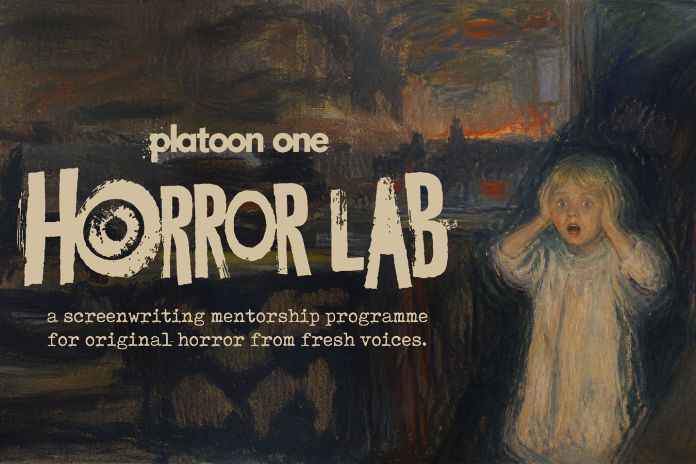
Inside the Platoon One Horror Lab, where India’s next generation of horror writers learns to watch before it writes
Ask Shiladitya Bora why he is starting a horror lab and he talks about fear as a kind of language. “Horror is one of the oldest ways we have of talking about what we can’t say out loud,” he says. “India has it in abundance, in our folklore, our homes, our silences. What we need now are writers who know how to use it with intent.”
Bora, the Berlinale Talents alumnus behind Platoon One Films, has spent more than fifteen years in independent cinema. His company’s credits include Bayaan, which premiered at TIFF, Toh Ti Ani Fuji, acquired by Sony Pictures Networks India, and Ghaath, which opened at the Berlinale. Now he is turning that experience toward a specific problem: how do you teach someone to frighten an audience without relying on what has always worked?
His answer is the Platoon One Horror Lab, a three-month online programme, running January to April 2027, that will select 15 writers and 15 original screenplays. The call for applications are already open till December 1, 2026. A Top 40 shortlist follows in mid-December. 15 final participants will be selected out of the 40 writers who deliver full screenplays by January 2027.
3 Phase Act
The Lab unfolds in three phases, moving from understanding the genre, to developing the screenplay, to finishing it. Writers spend their first weekends dissecting horror films, asking why one scene unsettles and another falls flat. They study the gap between dread and the jump scare, the work done by silence and off-screen sound, and how an actor’s position in a frame can make a room feel dangerous.
“The objective is to develop better observers before developing better writers,” Bora says. “If you can’t explain why a shot works, you can’t write one. Most people learn horror as a feeling. We want them to learn it as a grammar.”
Every major session comes with a practical assignment, and every assignment is peer-reviewed. The Lab’s philosophy is blunt: talent is useful, but discipline finishes films.
The mentor who makes you curious and irritated
At the heart of the programme is mentorship. The Lab’s mentors are globally recognised screenwriters, filmmakers and creators who have worked within the genre and developed their own cinematic language. Each is assigned just three writers, and each writer gets dedicated one-on-one sessions to discuss their project, receive honest feedback and work through the rewriting process.
The rule, is that mentors do not fix scripts. They name the problem, point toward possibilities and push back on choices. The solving belongs to the writer.
“We’d rather someone leave a session irritated and with a better question than satisfied with a borrowed answer. The goal is a better writer, not just a better draft.” Bora Says.
Alongside the mentorship runs a syllabus with some distinctly horror-minded lessons: building a whole story around a single ordinary object, whether a mirror, a doll or a set of house keys, and learning how to hide a theme inside a genre story so it unsettles rather than lectures. There is also a session on why people choose fear at all. The Lab treats horror as a therapeutic medium, a space where audiences confront anxieties they would otherwise keep buried.
Born in the dark. Built for the screen.
The Lab also looks past the page. Sessions on pitch decks, sales, festivals, distribution and marketing give the work a commercial map.
“There’s a mistake young writers make, which is assuming the script ends at the last page,” Bora says. “It doesn’t. Someone has to buy it, program it, market it. By the end of the Lab, we want the screenplay to be ready to leave the room.”
The programme closes with an offline pitching event where writers will pitch to invited filmmakers, producers and industry representatives giving the chance for projects to be seen, heard and considered.
Stories that travel
Underneath the schedules and syllabus is a larger wager. Bora believes the next wave of Indian horror will come from writers who know the rules well enough to bend them.
“We want stories that can travel anywhere in the world,” he says. “Horror is about what makes us uncomfortable and what stays with us after the screen goes dark. If we can help a few writers work from that instinct, we’ll have done something worthwhile.”
For more details visit – https://platoon.one/
Highlights

TIFF Reveals Plans for Industry Conference

Films by Shekhar Kapur and Shubham Yogi Selected for Toronto Gala

A Selection to Die for

Le Musk: A Brave New Frontier in Cinema

The Path finder: Jyoti Deshpande

Toonz to Honour Aabid Surti, Biren Ghose at Animation Masters Summit

India is the Country of Honour at Cannes

RAVINDRA VELHAL: DRIVING MEDIA TRANSFORMATION

THE PATH FINDER: JYOTI DESHPANDE

INTO THE WORLD OF RRR

Powerkids Appoints Manoj Mishra as CEO

Toonz Join Tunche Films to Co-Produce Spanish-Peruvian Animation Feature Kayara

National Museum of Indian Cinema Hosts Vintage Vehicles

I&B Secretary promises Govt’s Support to Film industry

Tom Cruise’s ‘Top Gun: Maverick’ to Blaze at Cannes

Illumination’s Minions: The Rise of Gru is the Annecy Festival Opener

Now, Shoot at Sight in India!

Lata Mangeshkar, India’s Singing Goddess

Quantum Image Making Has Arrived

Indian Films To Look Out For In 2022

2022: Centenary of Indian Cinema Legends

Singing Legend Lata Mangeshkar, Nightangale of India, Dies at 92

Bhushan Kumar’s T-Series Ventures Into OTT Content Creation Space

What’s India Looking for at European Film Market