10 indies from India for festival scouts
By Pickle September 16, 2026
Share:


By Saibal Chatterjee
Padayaatra

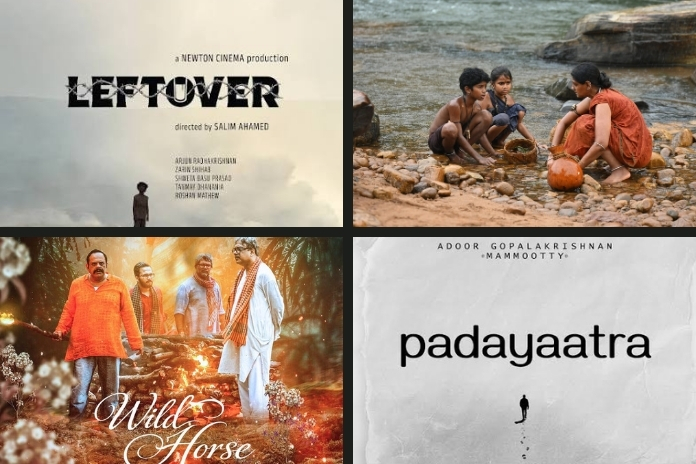
Adoor Gopalakrishnan’s first film in a decade reunites the Malayalam cinema legend with Mammootty after a 32-year hiatus. The superstar, whose company Mammootty Kampany is the film’s producer, plays a Gandhian doctor in 1970s-1980s Kerala negotiating a society in transition. The tale of a medical practitioner who relocates to the forests of Wayanad to work among the impoverished and marginalised explores ethics and professional probity. Padayaatra, scripted by Adoor and KV Mohankumar, co-stars Indrans and Grace Antony. The film is Adoor’s fourth collaboration with Mammootty after Anantaram (in which the actor played a supporting role), Vidheyan (in which his performance fetched a best actor National Award) and the critically acclaimed Mathilukal.
Khwab Hai Deewane Ka
The latest film from Ashish Avikunthak, whose cinematic oeuvre is more fascinating and challenging than that of almost any other director working in India, steadfastly steers clear of Indian cinema’s conventional structures of creation and distribution. His last film Meghnad Badh Kavya (The Killing of Meghnad, 2026), premiered at the International Film Festival Rotterdam (IFFR) earlier this year. His Vidhvastha (Devastated) also played IFFR in 2024. Avikunthak’s next film, Khwab Hai Deewane Ka, is an adaptation of the work of Hindi writer and playwright Krishna Baldev Vaid. It is titled after one of Vaid’s literary works. You may not hear of Avikunthak’s cinema among consumers of mainstream Indian films, but his films have greater and more permanent cinematic and artistic value than the viral images that assail us day in and day out. Khwab Hai Deewane Ka is his first Hindi film since 2011’s Katho Upanishad. All his films since then have been in Bengali.
Pagla Ghora
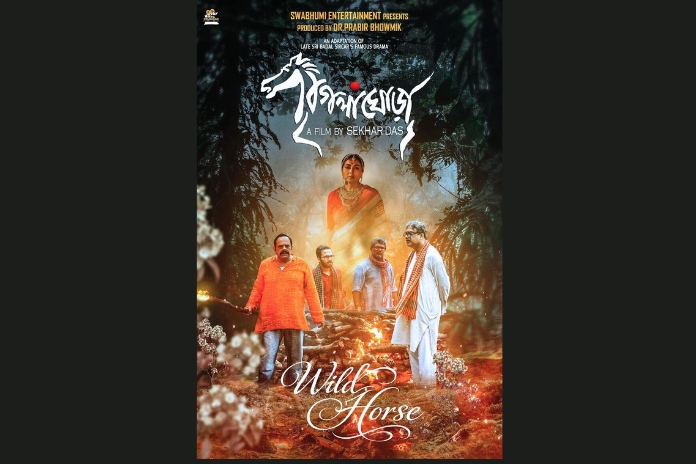
National award-winning Bengali filmmaker Sekhar Das brings to the big screen the celebrated Pagla Ghora (Wild Horse), a hard-hitting, anti-patriarchal Badal Sircar play that continues to resonate more than 60 years after it was written and first staged. The director, who has a theatre background himself, has adapted the play in a manner that is purely cinematic while not doing away entirely with its intricate performative proscenium qualities. The film lands a strong hammer blow on a myopic male-dominated society in which women are compelled to struggle for agency. Das keeps the core of the Sircar play intact – four men wait at a cremation ground, drinking, playing cards and chit-chatting, while the body of a young woman burns on a pyre and her spirit (embodied by Gargee Roychowdhury) hovers around them. The demons that the four pall-bearers try to suppress bubble to the surface in the process.
Lavender Fire
Raam Reddy, whose second film Jugnuma: The Fable premiered in Berlin two years ago, is now in the midst of his next film, Lavender Fire. It is reportedly about three Gen Z siblings whose lives converge in Mumbai and play out amid rising pressures of work, the quest of visibility on social media and rapidly shifting social priorities in a world where the real and the virtual collide. The exploration of Gen Z codes and their repercussions promises to be a lively examination of manners and mores, a far cry from the emotionally intense and stylistically elaborate Jugnuma. Reddy is of course no stranger to international film festivals. His debut Thithi was a Locarno award-winner in 2015. We expect Lavender Fire to surface at a major festival next year. Watch this space.
Moon
With three wins at the National Awards as well two key prizes at the 47th Moscow International Film Festival in 2025 for his delectable Ha Lyngkha Bneng (The Elysian Field), Pradip Kurbah is today one of Northeast India’s most feted filmmakers. Regarded as a pioneer in Meghalaya’s Khasi-language cinema, he is currently working on his sixth feature Moon, a psychological drama that alternates between Meghalaya and Delhi. A former rebel returns to his village in the hope of rebuilding his life but unanswered questions and unresolved issues get in the way of a clean break from the past. Kurbah’s Iewduh (Market) screened in Busan in 2019. Moon was selected for the Busan Film Festival’s Asian Project Market, a sure sign of the growing global acceptance of Kurbah’s highly individualistic and rooted cinema.
Veil of Dust
Another Meghalaya filmmaker, Dominic Sangma, has been making waves with his culturally grounded and psychologically complex Garo-language films. His third film, Veil of Dust, revolves around a 12-year-old girl and probes what the filmmaker describes as “a degradation of soil and soul”. It has been selected for the Asian Project Market – making it two in a row for Meghalaya – and Sangma is travelling to Busan in October. He plans to begin filming by the end of the year and hopes to complete it next year. The two previous films by the SRFTI alum – Ma’ama and Rapture – garnered international recognition. Rapture received widespread distribution in France in 2024. The plot of Veil of Dust is under wraps but what is amply clear is that the end product would be a film worth the wait.
Leftover
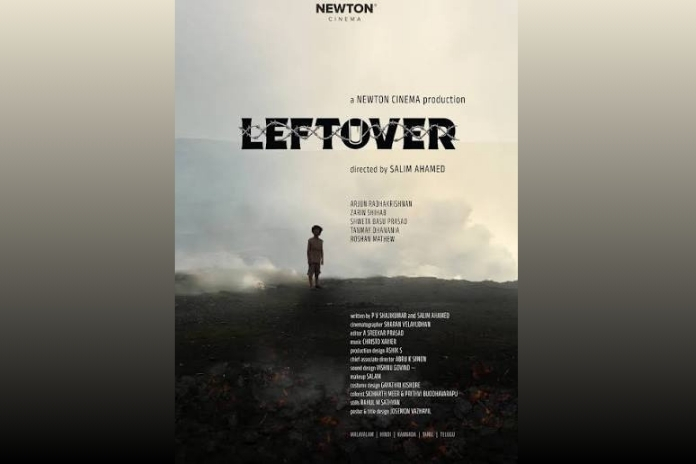
Produced by Anto Chittilappilly’s Newton Cinema, the boutique banner behind films such as Don Palathara’s Family and Prasanna Vithanage’s Paradise, Leftover has the makings of an out of the ordinary cinematic work primed to strengthen the producer’s reputation. Directed by the National Award-winning Kerala writer-director Salim Ahamed, the film is being screened in the newly-introduced Toronto Film Market. In a small town in South India, a couple is thrown into disarray after a shocking revelation about their son. The family’s foundations begin to crack under the weight of caste, guilt and secrets unveiled. Leftover, on whose soundtrack audiences will hear a multiplicity of languages, has a cast of actors drawn from across India – Arjun Radhakrishnan, Roshan Mathew, Zarin Shihab, Tanmay Dhanania and Shweta Basu Prasad.
Kyab
Diwa Shah, who works out of her native Nainital town, has already made her presence felt with the Kumaoni-language Bahadur The Brave (2023). It premiered at the 71st San Sebastian International Film Festival where it won the Kuxtabank New Directors Award. He second project, Kyab (Refuge), was selected for La Residence du Festival de Cannes, where she won the top scriptwriters’ grant. The under-production film, set in Delhi and McLeodganj, centres on two Tibetan brothers with opposing ideologies. Shah’s films are rooted in her own lived experiences and drawn from her exposure to the people she grew up amidst. Bahadur the Brave was about Nepalese migrant workers in her hometown stranded due to the Coronavirus pandemic. Kyab puts the spotlight on a community displaced by the forces of history and grappling with notions of home and disruption caused by elements they can barely control.
Bajrangi
The second film from Darbhanga filmmaker Parth Saurabh (Pokhar ke Dunu Paar), Bajrangi, set in the rural environs that he is personally familiar with, is ready to strike out on its own terms. Produced by actor-producer Anshuman Jha’s First Ray Films, which revealed a slate of six titles in Cannes this year, is co-written and edited by the director himself. With filmmaker Devashish Makhija (Ajji, Bhonsle, Joram) serving as executive producer, Bajrangi has the wherewithal to secure its place on the world map. It centres on a strongman serving a village chief whose loyalty to his master is tested when he hears the chatter of a couple having clandestine sex in a mango orchard that guards. He sets his mind upon uncovering the identity of the lovers, opening a sluice-gate of complications in the bargain.
Nadhi
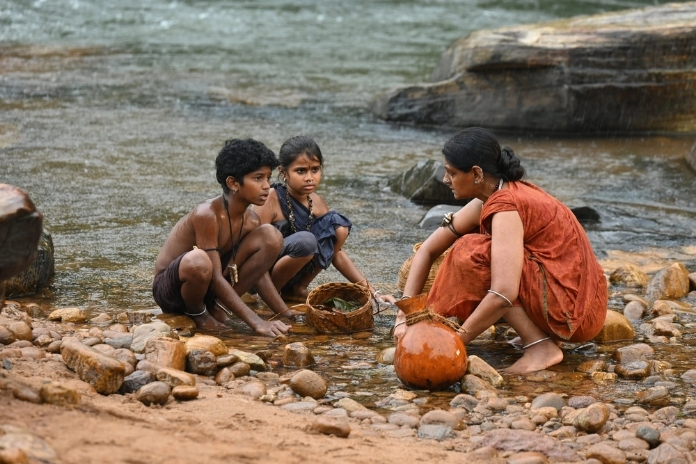
Nadhi, a Telugu film by California-based Aditya Vempaty, is a result of the years that he spent with the Koya tribe of the Eastern Ghats. The film, starring Nandita Das, Nasser and Mia Maelzer, is currently in post-production. It is set in the mid-20th century in the forests of Andhra Pradesh. An ancient tribe struggles to hold on to its traditional way of life as its members are drawn towards modernity ushered in by the construction of a dam. Shot among the tribals, the film has Nandita Das in the role of a village matriarch and Nasser as a government official. Nadhi promises to deliver anthropological depth couched in a tale propelled by the drama of life.
11 films already on the move
Lovers in the Blue Night (Hindi)
Director: Anuparna Roy
Orizzonti, 83rd Venice Film Festival
A Window on Asian Cinema, 31st Busan International Film Festival
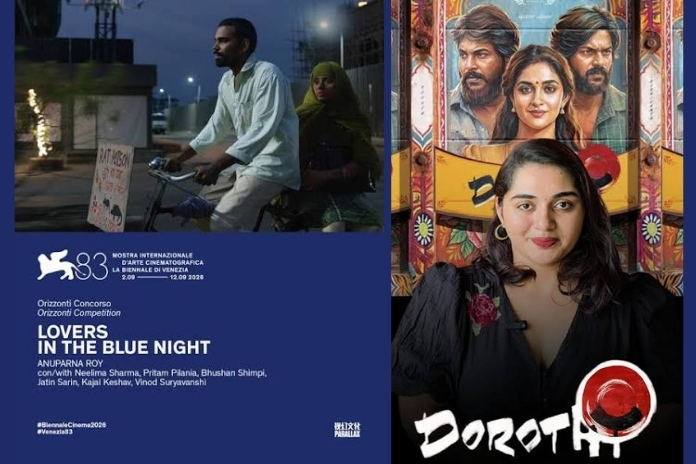
Dorothy (Tamil)
Director: Karthik Subbaraj
Centrepiece, 51st Toronto International Film Festival
HALF (Malayalam)
Director: Samjad
Midnight Madness, 51st Toronto International Film Festival
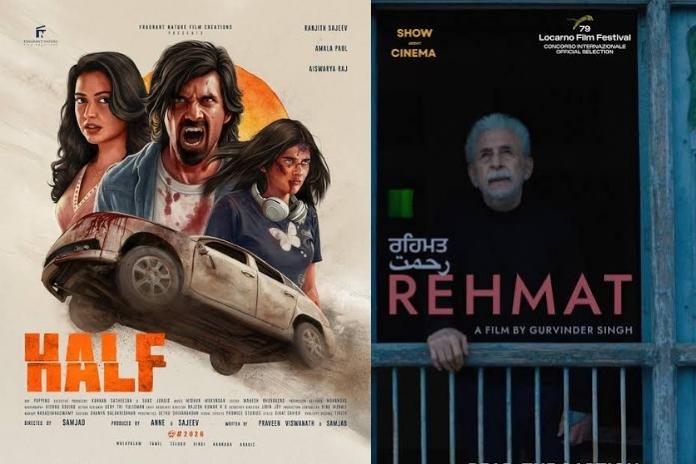
Rehmat (Punjabi)
Director: Gurvinder Singh
International Competition, 79th Locarno Film Festival
Birds in the Dark (Hanere de Panchi, Punjabi)
Director: Shashank Walia
Vision Asia, 31st Busan International Film Festival
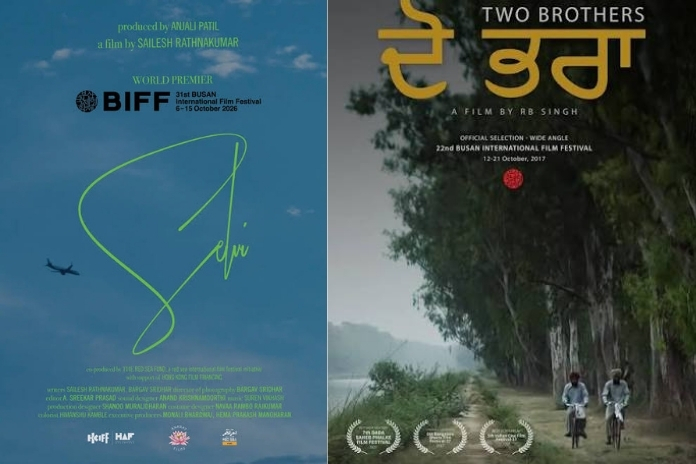
Selvi (Tamil)
Director: Sailesh Rathnakumar
Vision Asia, 31st Busan International Film Festival
Khoriya (Hindi, Nepali)
Director: Vishwendra Singh
A Window on Asian Cinema, 31st Busan International Film Festival
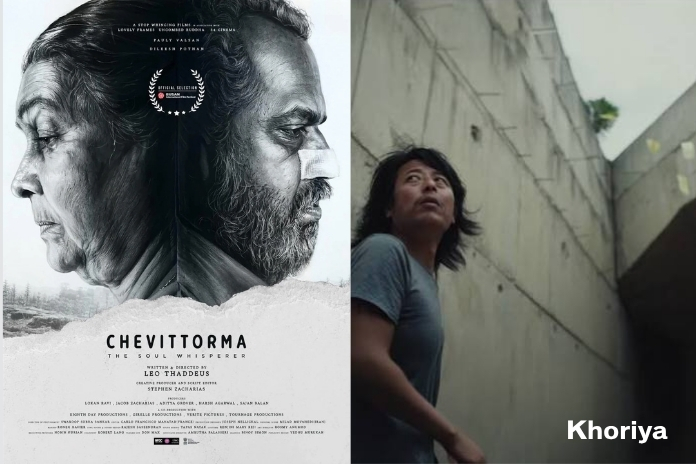
Chevittorma (The Soul Whisperer, Malayalam)
Director: Leo Thaddeus
A Window on Asian Cinema, 31st Busan International Film Festival
Birds on Ice (Ladakhi)
Director: Sahil H. Shah
A Window on Asian Cinema, 31st Busan International Film Festival

About An Intimate Matter (Ekanta Byaktigata Bishoy, Bengali)
Director: Sandeep Kumar Paul
A Window on Asian Cinema, 31st Busan International Film Festival

Not a Hero (Assamese)
Rima Das
A Window on Asian Cinema, 31st Busan International Film Festival
Highlights

Editor’s Note: 44th Toronto International Film Festival Pickle Sept 2019 Edition

TIFF Reveals Plans for Industry Conference

Films by Shekhar Kapur and Shubham Yogi Selected for Toronto Gala

A Selection to Die for

Le Musk: A Brave New Frontier in Cinema

The Path finder: Jyoti Deshpande

Toonz to Honour Aabid Surti, Biren Ghose at Animation Masters Summit

India is the Country of Honour at Cannes

RAVINDRA VELHAL: DRIVING MEDIA TRANSFORMATION

THE PATH FINDER: JYOTI DESHPANDE

INTO THE WORLD OF RRR

Powerkids Appoints Manoj Mishra as CEO

Toonz Join Tunche Films to Co-Produce Spanish-Peruvian Animation Feature Kayara

National Museum of Indian Cinema Hosts Vintage Vehicles

I&B Secretary promises Govt’s Support to Film industry

Tom Cruise’s ‘Top Gun: Maverick’ to Blaze at Cannes

Illumination’s Minions: The Rise of Gru is the Annecy Festival Opener

Now, Shoot at Sight in India!

Lata Mangeshkar, India’s Singing Goddess

Quantum Image Making Has Arrived

Indian Films To Look Out For In 2022

2022: Centenary of Indian Cinema Legends

Singing Legend Lata Mangeshkar, Nightangale of India, Dies at 92

Bhushan Kumar’s T-Series Ventures Into OTT Content Creation Space