S.S. Rajamouli’s Animated Saga Gains International Acclaim at Annecy MIFA
By Pickle June 21, 2026
Share:


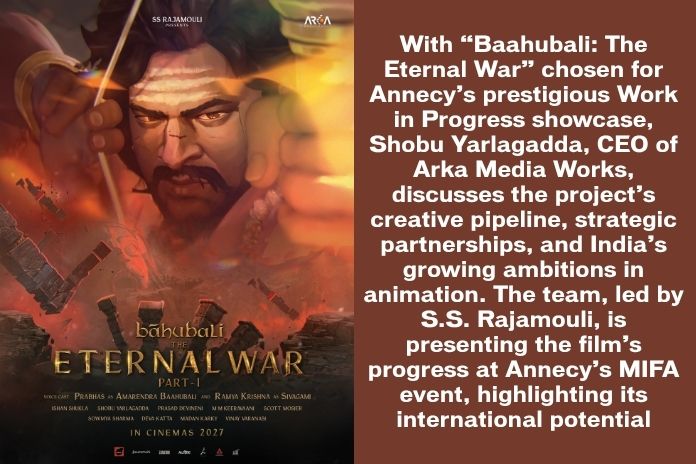
With “Baahubali: The Eternal War” chosen for Annecy’s prestigious Work in Progress showcase, Shobu Yarlagadda, CEO of Arka Media Works, discusses the project’s creative pipeline, strategic partnerships, and India’s growing ambitions in animation. The team, led by S.S. Rajamouli, is presenting the film’s progress at Annecy’s MIFA event, highlighting its international potential.
Baahubali: The Eternal War, directed by Ishan Shukla, has been selected for Annecy’s Work in Progress 2026. What does that selection mean for the film, for Arka, and for Indian animation’s place on the world stage?
From the very beginning, our ambition with Baahubali: The Eternal War was to create an animated film that is rooted in our mythology and storytelling traditions but can appeal to audiences anywhere in the world.
Being selected for Annecy’s Work in Progress program gives the entire team confidence that we are moving in the right direction. Annecy is one of the most respected platforms for animation, so having the opportunity to present the film there is very encouraging for everyone who has been part of this journey.
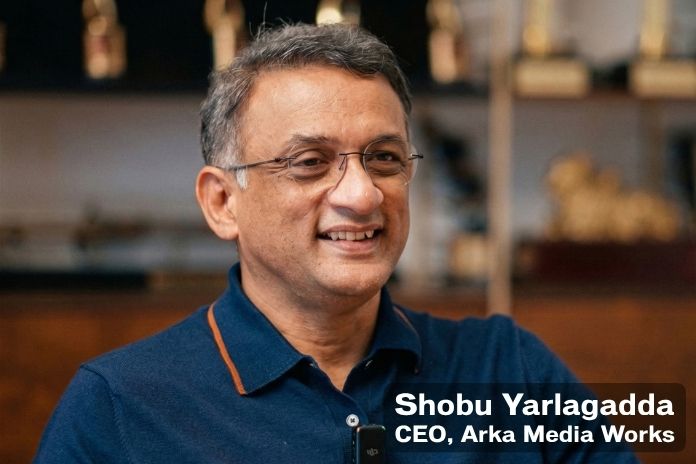
For us, it’s a chance to share our vision with creators, studios, distributors, and audiences from around the world, while also learning from the wider animation community. More broadly, we hope it contributes to the growing belief that ambitious, original animated films can be created from India and appreciated globally.
You and Rajamouli garu chose to extend the Baahubali universe into a stylized 3D animated feature. As a producer, what are the going forward next steps?
The immediate focus is completing the film to the highest possible standard. Animation is a highly collaborative medium, and we are fortunate to be working with an incredible group of partners across different countries who each bring unique expertise to the project.
Our next steps are really about continuing to refine the film, strengthen the creative pipeline, and ensure that every aspect of the production supports the vision we set out with.
Annapurna and Mihira opened the A&M MoCap Lab on the back of two flagship projects—Varanasi and Baahubali: The Eternal War. As a co-promoter of the lab and a producer using it, why was building this facility in Hyderabad more important than booking a stage in Vancouver or London?
For us, this was about building long-term capability rather than solving a short-term production requirement.
India has incredible creative talent, and if we want to build a strong animation and visual effects ecosystem, we also need world-class infrastructure here. That’s what motivated us to build the A&M MoCap Lab in Hyderabad.
The idea was not just to support our own productions but to create a resource that can be used by filmmakers, animation studios, and game developers across the country. If we want more world-class content to be created from India, we have to invest in the tools and facilities that make that possible. Having access to these tools locally allows directors, actors, technicians, and artists to collaborate much more closely and experiment more freely.
Walk us through how mocap actually shaped Eternal War and what Varanasi proved about the lab’s range. What can other producers learn from how these two very different films used the same floor?
Motion capture became an important part of our process because it allowed us to capture performances early and provide a strong foundation for the animation teams.
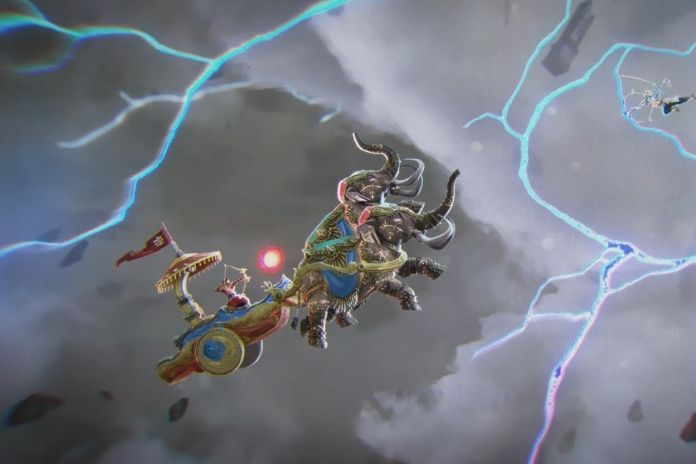
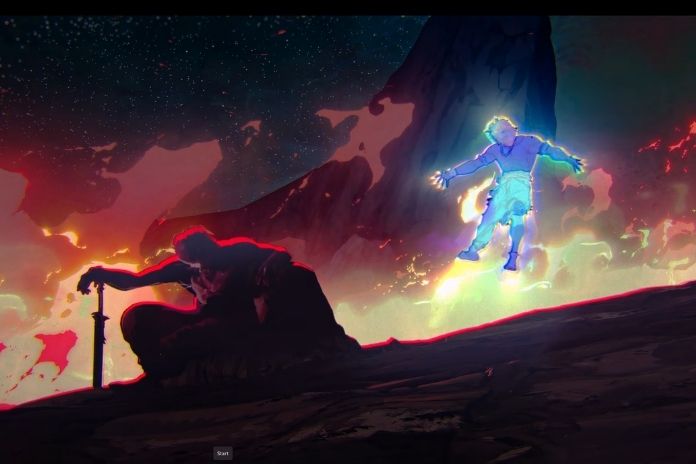
For Baahubali: The Eternal War, motion capture helped us bring performance into the process much earlier. By capturing performers on the mocap stage, we were able to give our pre-vis and animation teams a strong foundation built on real movement and emotion. It helped shape scenes more organically and ensured the performances felt grounded, even within a stylized animated world.
What is interesting is that Varanasi and Eternal War are very different projects creatively, yet both benefited from the same technology. That demonstrates that motion capture is not tied to a particular visual style or genre. It is simply a tool that can support different creative goals.
As a producer, what do you look for before greenlighting a project today — the IP, the director, the partners, the technology, or the audience? How has that checklist changed between Baahubali: The Beginning in 2015 and Eternal War in 2027?
For me, it still starts with the story and the director behind it. Technology, partners, and business models will keep changing, but audiences continue to respond to great stories and memorable characters.
When evaluating a project, all those factors matter, but they need to support a strong creative vision. It always comes down to finding a story worth telling and backing the right creator to tell it.
You’ve publicly said AI is “one more tool” and that “we can all be directors, but not all of us can be Spielberg.” Beyond AI, where are motion capture, virtual production, real-time engines, and stylized animation really transforming the industry—and what’s your message?
Every new technology creates new possibilities for filmmakers. Whether it’s AI, motion capture, virtual production, or real-time engines, these tools are helping teams work faster, collaborate better, and explore ideas in new ways.
But at the end of the day, they’re still just tools. Technology can support the process, but it can’t replace creativity, storytelling, or human imagination.
My message to filmmakers is this: stay curious, learn the tools, and use them where they genuinely help. The technology will keep changing, but great stories will always matter most.
Highlights

Glimpses of the future

TIFF Reveals Plans for Industry Conference

Films by Shekhar Kapur and Shubham Yogi Selected for Toronto Gala

A Selection to Die for

Le Musk: A Brave New Frontier in Cinema

The Path finder: Jyoti Deshpande

Toonz to Honour Aabid Surti, Biren Ghose at Animation Masters Summit

India is the Country of Honour at Cannes

RAVINDRA VELHAL: DRIVING MEDIA TRANSFORMATION

THE PATH FINDER: JYOTI DESHPANDE

INTO THE WORLD OF RRR

Powerkids Appoints Manoj Mishra as CEO

Toonz Join Tunche Films to Co-Produce Spanish-Peruvian Animation Feature Kayara

National Museum of Indian Cinema Hosts Vintage Vehicles

I&B Secretary promises Govt’s Support to Film industry

Tom Cruise’s ‘Top Gun: Maverick’ to Blaze at Cannes

Illumination’s Minions: The Rise of Gru is the Annecy Festival Opener

Now, Shoot at Sight in India!

Lata Mangeshkar, India’s Singing Goddess

Quantum Image Making Has Arrived

Indian Films To Look Out For In 2022

2022: Centenary of Indian Cinema Legends

Singing Legend Lata Mangeshkar, Nightangale of India, Dies at 92

Bhushan Kumar’s T-Series Ventures Into OTT Content Creation Space