Incubating the Next Wave
By Pickle March 5, 2026
Share:


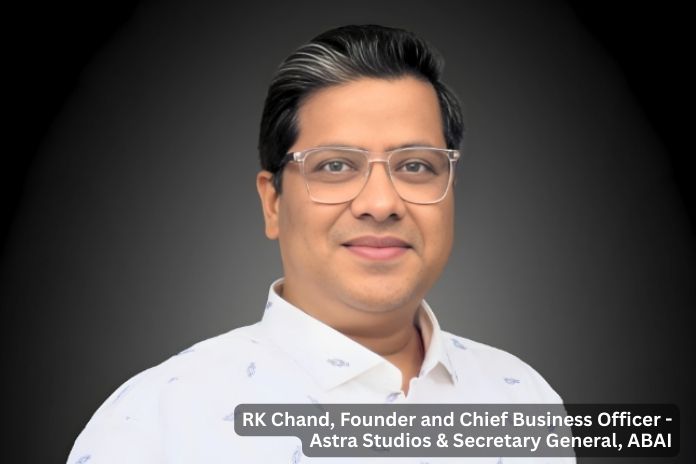
In a world where creativity meets technology, structured incubation transforms imaginative ideas into global storytelling universes—because true innovation thrives only when imagination is backed by strong infrastructure. By RK Chand
Creative founders live with a paradox.
They possess extraordinary imagination—the ability to build worlds, design characters, engineer experiences, and push technological boundaries. Yet many lack structured access to capital, global markets, and long-term IP strategy.
In sectors such as Animation, VFX, Gaming, Comics, and XR (AVGC-XR), talent alone is not enough. The difference between a brilliant studio and a scalable company often lies in incubation discipline.
At ABAI, we have seen this firsthand.
Creative technology incubation is fundamentally different from traditional startup incubation. It cannot be limited to providing office space or early-stage grants. It requires layered support: mentorship from industry veterans, financial literacy for founders, IP structuring guidance, exposure to international markets, and policy navigation assistance.
Founders in our ecosystem are often creators first and entrepreneurs second. They think in frames, scripts, code, and soundscapes—not balance sheets.
That is not a weakness; it is their superpower. But without business architecture around that creativity, many promising ventures plateau too early.
This is where structured incubation becomes critical.
Through platforms like GAFX, we aim to provide more than visibility. GAFX is a discovery platform—for investors seeking high-potential IP, for global buyers scouting for co-production opportunities, and for founders looking to test their ideas in front of seasoned professionals.
We deliberately curate global and Indian experts to conduct masterclasses and “making-of” sessions of some of the world’s biggest blockbusters. These sessions do more than inspire; they decode process.
They reveal the financial engineering, pipeline structuring, production discipline, and market positioning behind successful creative enterprises.
Exposure changes ambition. But mentorship converts ambition into execution.
In a rapidly evolving technological landscape, founders must also learn when to pivot. Real-time rendering, AI-assisted workflows, virtual production, and interactive storytelling—each wave of innovation alters both cost structures and audience expectations. Incubation ecosystems must help startups navigate these shifts without losing their core creative identity.
We advise founders to think beyond project work.
Service revenues may build capability, but long-term value lies in repeatable, monetizable intellectual property. Characters, universes, game mechanics, and proprietary tools—these assets compound over time. The global market rewards IP ownership, not just execution capacity.
To scale globally, creative startups must therefore design frameworks where IP can travel across formats: from animation to gaming, from short-form to immersive experiences, and from regional language to international markets.
The next unicorn from Karnataka may not be a SaaS platform.
It may be a storytelling universe.
But universes do not emerge from chaos. They require disciplined incubation—structured mentoring, financial planning, global exposure, and policy alignment.
Our role at ABAI is to build that enabling ecosystem. To create bridges between founders and financiers. Between artists and technologists. Between local talent and global opportunity.
The creative economy is entering a phase where technology cycles are shorter, competition is global, and differentiation depends on originality combined with execution strength.
Incubation, therefore, is not an optional support system.
It is infrastructure.
And as we often remind our community: “Imagination needs infrastructure.”
GAFX exists to build exactly that.
Highlights

How Streaming Platforms Helped Entertainment Business During Pandemic

TIFF Reveals Plans for Industry Conference

Films by Shekhar Kapur and Shubham Yogi Selected for Toronto Gala

A Selection to Die for

Le Musk: A Brave New Frontier in Cinema

The Path finder: Jyoti Deshpande

Toonz to Honour Aabid Surti, Biren Ghose at Animation Masters Summit

India is the Country of Honour at Cannes

RAVINDRA VELHAL: DRIVING MEDIA TRANSFORMATION

THE PATH FINDER: JYOTI DESHPANDE

INTO THE WORLD OF RRR

Powerkids Appoints Manoj Mishra as CEO

Toonz Join Tunche Films to Co-Produce Spanish-Peruvian Animation Feature Kayara

National Museum of Indian Cinema Hosts Vintage Vehicles

I&B Secretary promises Govt’s Support to Film industry

Tom Cruise’s ‘Top Gun: Maverick’ to Blaze at Cannes

Illumination’s Minions: The Rise of Gru is the Annecy Festival Opener

Now, Shoot at Sight in India!

Lata Mangeshkar, India’s Singing Goddess

Quantum Image Making Has Arrived

Indian Films To Look Out For In 2022

2022: Centenary of Indian Cinema Legends

Singing Legend Lata Mangeshkar, Nightangale of India, Dies at 92

Bhushan Kumar’s T-Series Ventures Into OTT Content Creation Space