Rewriting the Indo–French Screen Story: What’s Next
By Pickle May 10, 2026
Share:


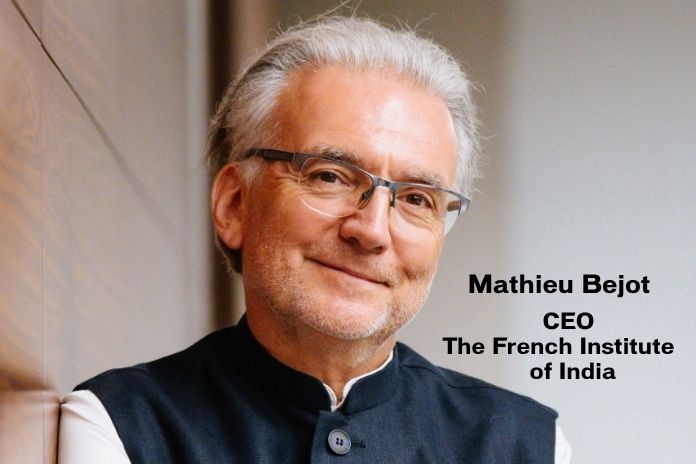
Mathieu Bejot, CEO, The French Institute of India, outlines how co-productions, IP exchange, and distribution can unlock the next phase of India–France collaboration across films, animation, and the AVGC-XR ecosystem.
Q: What are your top priorities for India–France audiovisual collaboration through the lens of The French Institute of India?
A: Our main priorities are:
Increasing the number of coproductions and collaborations between France and India, spanning films, documentaries, and the AVGC-XR sector.
Boosting the circulation of French films in India—especially their theatrical release—and, conversely, increasing the presence of Indian films in France.
Promoting France as a filming destination for Indian films and web series.
Q: India and France enjoy a robust bilateral relationship. How can we accelerate this in the filmed entertainment space?
A: France and India are already strong coproduction partners, and there is a keen appetite in France for Indian stories and talent. Currently, there are more than half a dozen feature coproductions at various stages of development and production, with further discussions underway for future collaborations. This potential can be developed even more aggressively with greater clarity around the financing environment in India. The recent pause on the cash incentive system has impacted several coproduction projects. We hope it will be reinstated soon, as it is a real game-changer for Indian producers and filmmakers, and can significantly boost the number of India–France coproductions.
Q: You organize renowned French cinema festivals and facilitate connections between film and animation leaders from both countries. What has been your experience?
A: I am always amazed by the reception that French films and talent receive in India. Whether it’s classic movies shown at Mumbai’s Regal Cinema in partnership with the Film Heritage Foundation, contemporary films, or animated movies at the Animela festival, there is clearly an audience for French and international cinema. Our main challenge is ensuring films secure theatrical releases to reach wider audiences.
Q: How do you see Indian festivals and labs, such as DocedgeKolkata, helping Indian projects reach French and European markets?
A: Given the size and diversity of the Indian market, these festivals and labs play an essential role in curating and mentoring projects that have the potential to appeal to France and Europe.
Q: Which lessons from your global TV and documentary career are you applying most directly to India–France industry ties?
A: I try to remember the importance of balancing ambition with reality. While content is king and good stories travel, achieving lasting results requires patiently building an international network and learning to navigate very different ecosystems for production and distribution. One key is developing relationships between like-minded producers from both countries, so they can help projects get off the ground and support filmmakers’ artistic visions.
Q: What types of Indian stories, formats, or genres are best suited for Indo–French co-productions right now, both creatively and commercially? And vice versa?
A: Recent coproductions, from All We Imagine As Light to Schirkoa, Homebound, Agra, and Girls Will Be Girls—as well as numerous shorts and documentaries—are very diverse and largely come from the independent, auteur-driven sector. It would be interesting to see if this model can also extend to more commercial films.
Q: How do you connect film-heritage work like FISCH with your broader audiovisual mandate, and what long-term ecosystem do you hope it creates?
A: FISCH is crucial in supporting the Film Heritage Foundation’s remarkable work, not just in film preservation, restoration, and exploitation, but also in raising awareness and training personnel to implement this vision across India. Indian cinema is a part of global cultural heritage that must be preserved and shared. It’s no surprise that a film restored by FHF, Amma Ariyan, was selected again this year for Cannes Classics.
Q: How can new IP-focused markets, such as the French IP Market for Asian adaptations in Mumbai, benefit both French rights-holders and Indian platforms?
A: India has a vast, dynamic, but fragmented market, and there’s a shortage of screens for international content. Focusing on IP adaptations ensures compelling French stories can travel and resonate with Indian audiences, thanks to tailored adaptations that reflect local tastes and sensibilities.
Q: Distribution is key for both countries. How can we strengthen this aspect to create a win-win for both cinemas?
A: Distribution is perhaps the biggest challenge, as there’s no simple way to increase the presence of Indian films in France or French films in India overnight. We’re in conversations with multiplex chains about securing regular releases of French films, as we believe there is an audience for them—but we need to build communities around regular, curated screenings.
Q: What are your goals at Cannes later this month for India–France audiovisual ties, and what messages do you want to highlight?
A: Our agenda at Cannes includes sharing information about both markets, raising awareness of collaboration opportunities, and connecting professionals from India and France.
Q: Looking five years ahead, what would an ideal Indo–French audiovisual landscape look like—a vision that would make your dreams come true?
A: Ideally, audiences in both countries would have easy access to original stories and more coproductions, whether on the big screen or through digital platforms.
SCALING INDIA’S M&E INDUSTRY REQUIRES COORDINATED INVESTMENT IN TALENT, PRODUCTION EXCELLENCE, AND EXPORT STRATEGIES TO TRANSFORM EPISODIC SUCCESS INTO SUSTAINED GLOBAL PRESENCE
Highlights

Stream These 11 Films in July 2021

Dada Saheb Award Gets Rajinikanth

TIFF Reveals Plans for Industry Conference

Films by Shekhar Kapur and Shubham Yogi Selected for Toronto Gala

A Selection to Die for

Le Musk: A Brave New Frontier in Cinema

The Path finder: Jyoti Deshpande

Toonz to Honour Aabid Surti, Biren Ghose at Animation Masters Summit

India is the Country of Honour at Cannes

RAVINDRA VELHAL: DRIVING MEDIA TRANSFORMATION

THE PATH FINDER: JYOTI DESHPANDE

INTO THE WORLD OF RRR

Powerkids Appoints Manoj Mishra as CEO

Toonz Join Tunche Films to Co-Produce Spanish-Peruvian Animation Feature Kayara

National Museum of Indian Cinema Hosts Vintage Vehicles

I&B Secretary promises Govt’s Support to Film industry

Tom Cruise’s ‘Top Gun: Maverick’ to Blaze at Cannes

Illumination’s Minions: The Rise of Gru is the Annecy Festival Opener

Now, Shoot at Sight in India!

Lata Mangeshkar, India’s Singing Goddess

Quantum Image Making Has Arrived

Indian Films To Look Out For In 2022

2022: Centenary of Indian Cinema Legends

Singing Legend Lata Mangeshkar, Nightangale of India, Dies at 92