The India Paradox: The Future of Content Strategy
By Pickle October 10, 2026
Share:


India’s vast audiences and low revenues per user are forcing content companies to rethink formats, partnerships and ownership. How they respond offers lessons for a global industry facing tighter margins and fragmenting attention.
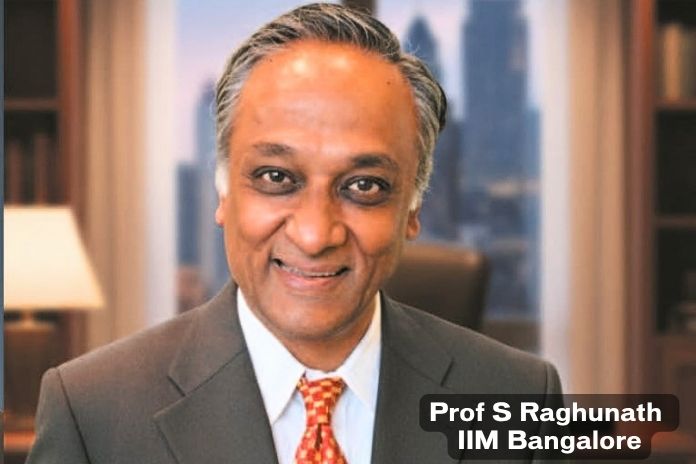
By Prof. S. Raghunath
Walking the aisles of the Palais, you will hear India described in superlatives: hundreds of millions of smartphone users, more films produced than anywhere else, one of the fastest-growing advertising markets among large economies. All true, and all beside the point. For anyone buying, selling or co-producing content, the more interesting question is not how big India is, but what its peculiar economics reveal about where the global content business is heading.
In strategic terms, India is a paradox: a market of enormous scale and small tickets. How Indian companies are resolving that paradox offers lessons well beyond the subcontinent.
A Format That Came from Nowhere
Consider the microdrama. Two years ago, vertical serialised stories told in one- to three-minute episodes were a curiosity imported from China and the United States. Today, according to Lumikai, India’s microdrama segment is worth about $300 million, has logged 450 million downloads and serves 100 million monthly users. By late 2025, Indians were downloading more short-drama apps than mainstream streaming apps. Zee has acquired a microdrama platform and folded it into ZEE5, ShareChat has turned much of its energy towards the format, and telecom operators are bundling it.
It is tempting to read this as a format story: shorter episodes for shorter attention spans. That misses the strategy. What is notable is the business model. Most Indian microdrama platforms charge subscriptions from the start, rather than burning cash to buy an audience with free, ad-supported content as the first generation of Indian OTT players did. Production costs are a fraction of those of a streaming series, commissioning cycles are measured in weeks, and episode-level drop-off data flows straight back into the writers’ room. Microdrama is less a new genre than a new set of unit economics, designed from the ground up for a market with low revenue per user.
Scale Without Margin
That design choice matters because India’s central problem has never been demand. The FICCI-EY report released in March put the sector at ₹2.78 trillion (about $32 billion) in 2025, growing 9%, with digital media now the largest segment at over ₹1 trillion. Beneath the headline, though, the stress lines are visible. Pay TV households are declining. News monetisation is weak. Streaming profitability remains elusive for most players. And the number that should interest every seller in Cannes: digital licensing revenues grew just 2% last year.
That 2% tells a story. The era in which global streamers wrote large cheques for Indian originals and library content, partly to plant a flag, is over. Consolidation at home has reduced the number of deep-pocketed buyers, and those that remain are disciplined. For international distributors, premium pricing for finished programming can no longer be assumed. India rewards format adaptation, revenue-sharing and partnerships that lower the buyer’s risk.
There is a second, quieter dimension of scale. “India” is not one audience. Subscription growth is being driven disproportionately by regional-language content and sports, and microdrama apps are planning rollouts in Bengali, Marathi and Gujarati almost as fast as in Hindi. A company that plans for “India” as a single market is, in practice, planning for one of perhaps a dozen. Distribution, dubbing and marketing budgets have to be allocated language by language, and the winners are those who treat linguistic depth as a capability rather than a cost.
From Back Office to IP Owner
If the paradox is scale without margin, the strategic response emerging in India is to capture more of the value chain. For two decades, India’s role in global entertainment was largely that of a service provider: animation, VFX, post-production and dubbing at competitive cost. That position is shifting. With AI compressing production timelines, Indian studios are moving from cost arbitrage towards speed and, increasingly, towards owning intellectual property. Microdrama producers that began as vendors are building their own apps. Animation houses are developing original franchises rather than only servicing others’.
This is a familiar strategic arc, the move from supplier to principal, but its pace in India is unusual, and it changes the conversation international partners should be having. The question is no longer “Can India produce this for us cheaply?” but “What IP can we build together, and who owns what?”
Three Lessons for the Croisette
First, design the business model before the content. India’s microdrama boom shows that formats succeed when their economics are built for the market’s realities, not imported from richer ones.
Second, price for partnership, not for transaction. With licensing growth flat, the most durable India deals will be co-productions, format adaptations and revenue-sharing arrangements that align incentives.
Third, think in languages, not countries. The next billion viewers, in India and across the Global South, will be reached through hyperlocal stories with modest budgets and high cultural specificity.
India has long been called the market of the future. The more useful observation is that it is a market of the present, solving under severe price constraints the problems that mature markets are only beginning to face: fragmenting attention, softening ad yields and the end of cheap capital.
Highlights

Gaming Industry Braves Covid

Krishna Janmashtami Special

TIFF Reveals Plans for Industry Conference

Films by Shekhar Kapur and Shubham Yogi Selected for Toronto Gala

A Selection to Die for

Le Musk: A Brave New Frontier in Cinema

The Path finder: Jyoti Deshpande

Toonz to Honour Aabid Surti, Biren Ghose at Animation Masters Summit

India is the Country of Honour at Cannes

RAVINDRA VELHAL: DRIVING MEDIA TRANSFORMATION

THE PATH FINDER: JYOTI DESHPANDE

INTO THE WORLD OF RRR

Powerkids Appoints Manoj Mishra as CEO

Toonz Join Tunche Films to Co-Produce Spanish-Peruvian Animation Feature Kayara

National Museum of Indian Cinema Hosts Vintage Vehicles

I&B Secretary promises Govt’s Support to Film industry

Tom Cruise’s ‘Top Gun: Maverick’ to Blaze at Cannes

Illumination’s Minions: The Rise of Gru is the Annecy Festival Opener

Now, Shoot at Sight in India!

Lata Mangeshkar, India’s Singing Goddess

Quantum Image Making Has Arrived

Indian Films To Look Out For In 2022

2022: Centenary of Indian Cinema Legends

Singing Legend Lata Mangeshkar, Nightangale of India, Dies at 92